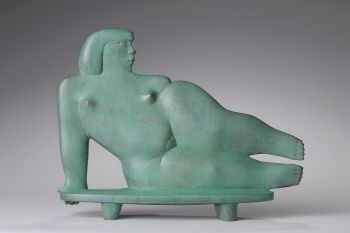
Jacob Johannes (Jaap) Egmond (born August 31, 1913 in New York, died November 26, 1997 in Amstelveen) was a versatile Dutch artist, known for his work as a sculptor, painter, and teacher, as well as his skills as a pianist.
Egmond has made a significant contribution to art education and theory, especially in the areas of art appreciation and drawing education.
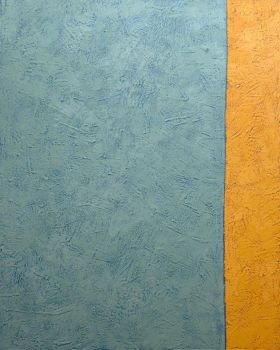
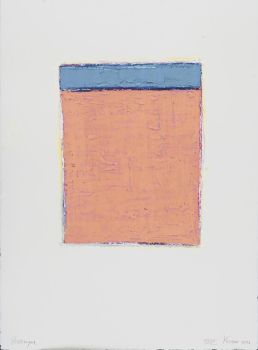
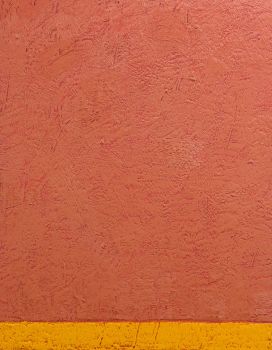
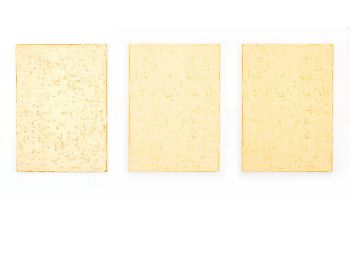
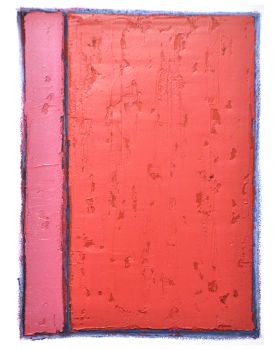
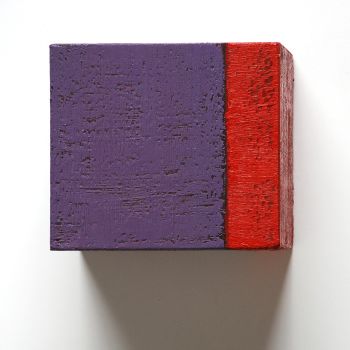
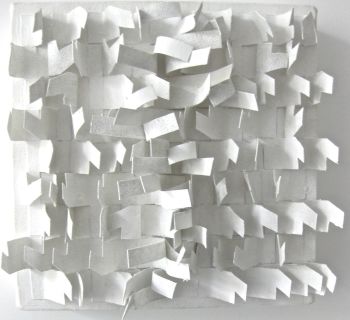
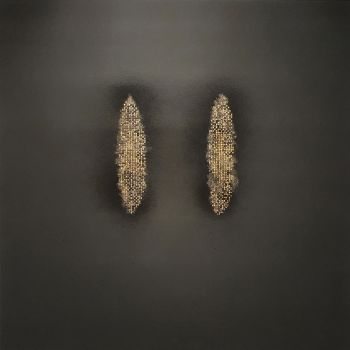
His oeuvre, which mainly consists of abstract reliefs, shows a clear affinity with the work of Jan Schoonhoven and places him as a leading figure within the minimalist movement in the Netherlands during the 1970s and 1980s.
Born in New York as the son of a captain, Egmond moved with his family back to the Netherlands due to the threat of World War I, where he grew up in Amsterdam. Between 1932 and 1936 he trained as a drawing teacher at the National Institute for the Training of Drawing Teachers in Amsterdam, after first studying piano for a year at the Amsterdam Conservatory.
After his education, he started as a drawing teacher in Amsterdam in 1937, a role he would fulfill throughout his career. After the Second World War he taught at the Vossius Gymnasium and later at the Pedagogical Academy in Amsterdam, where he taught drawing, manual labor and art history.
In the 1960s, together with colleague Klaas de Poel, he developed an innovative teaching method for the Kweekschool, which was included in various textbooks.
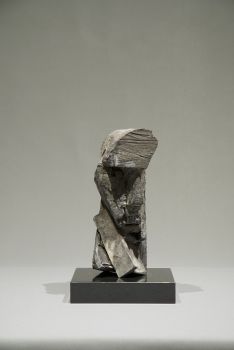
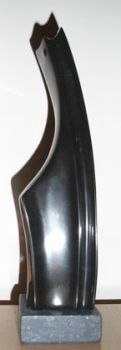
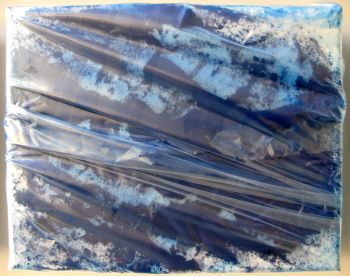
In 1969, Egmond settled as an artist in Amstelveen, where he focused on creating hundreds of reliefs in cardboard and paper, later followed by experiments with steel and painting. In the 1980s he worked with Wim de Ruiter on total theater projects, in which his large sculptures formed a dynamic backdrop for modern musical performances.
Egmond, who in his younger years hesitated between a career as a pianist or an art teacher, later acted as an accompanist for singers within a closed circle. He was married to Joke Sprokkereef (1918-1986), a teacher, and together they had four children. The family lived in Amstelveen after the Second World War.
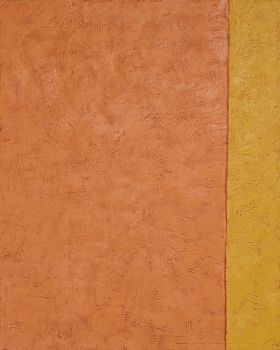
As an artist, Egmond is considered a constructivist, strongly influenced by the Dutch Zero movement. His work is characterized by the use of light and shadow and a preference for monochromy, with which he has made a unique contribution to Dutch modern art.