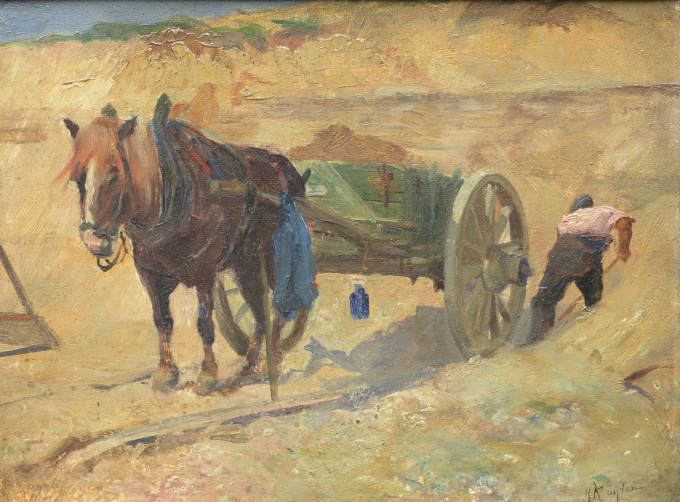
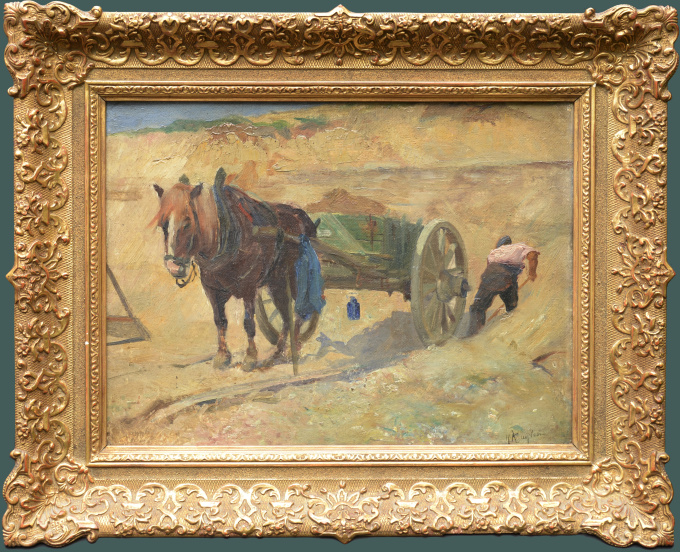
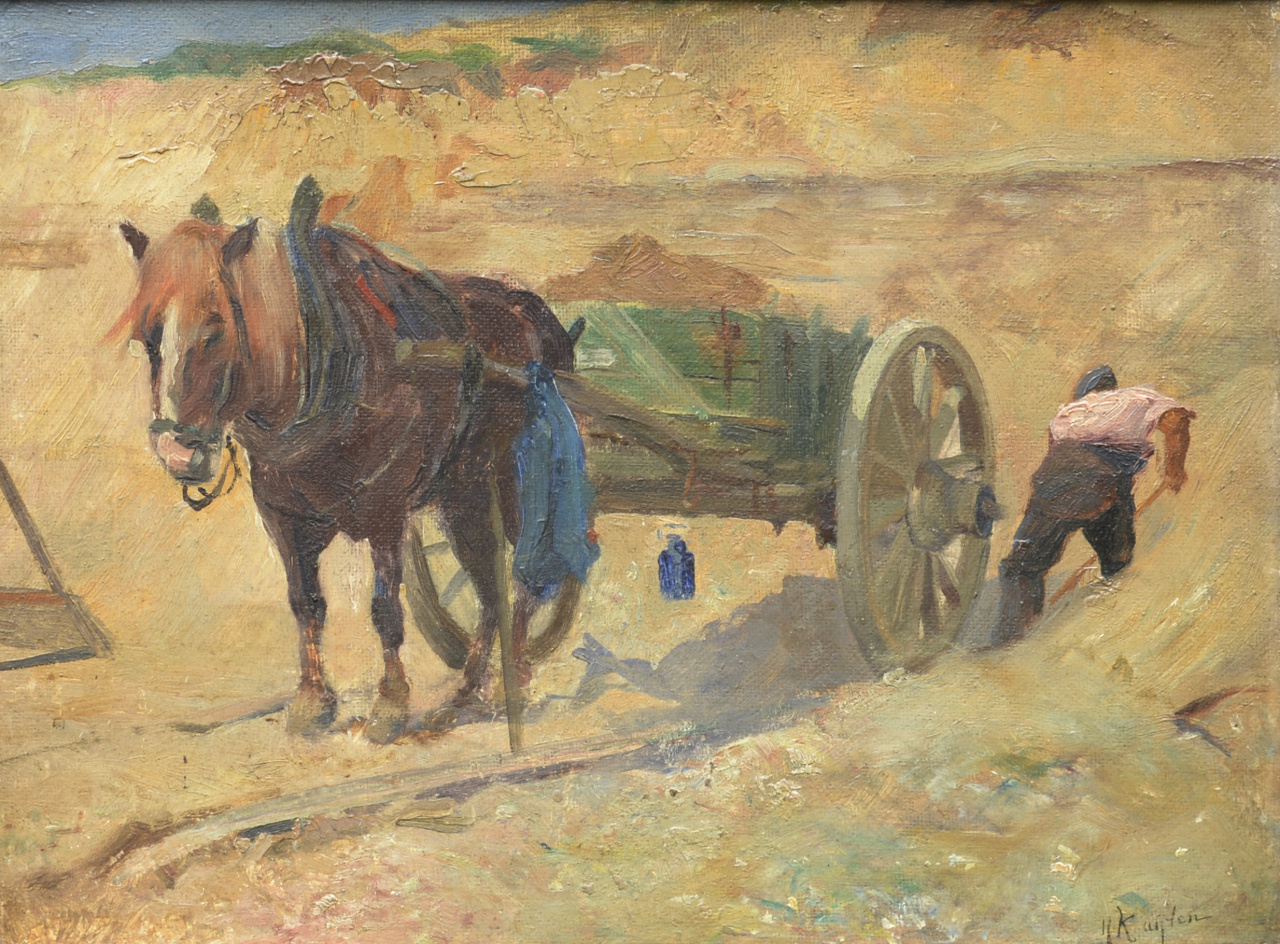
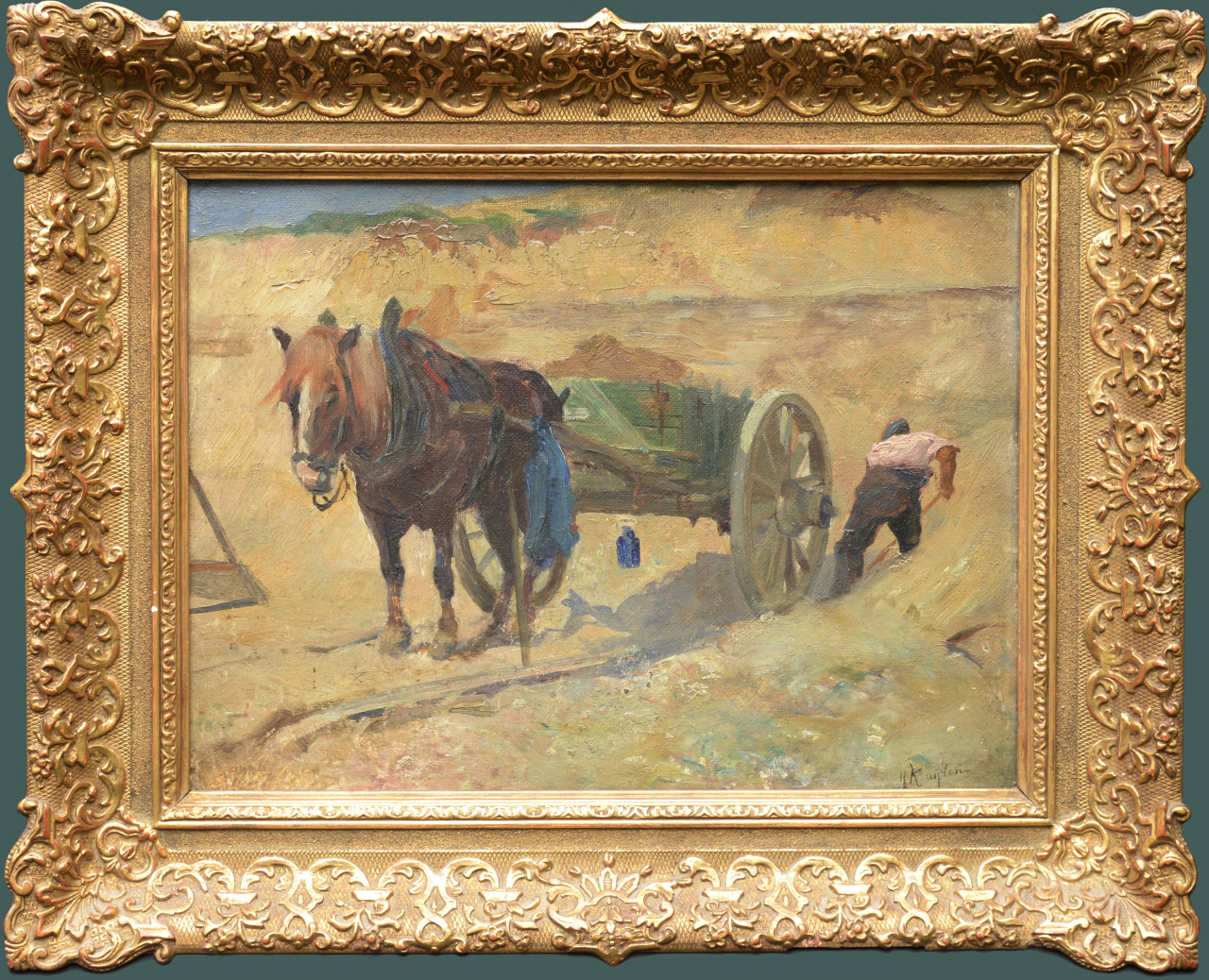
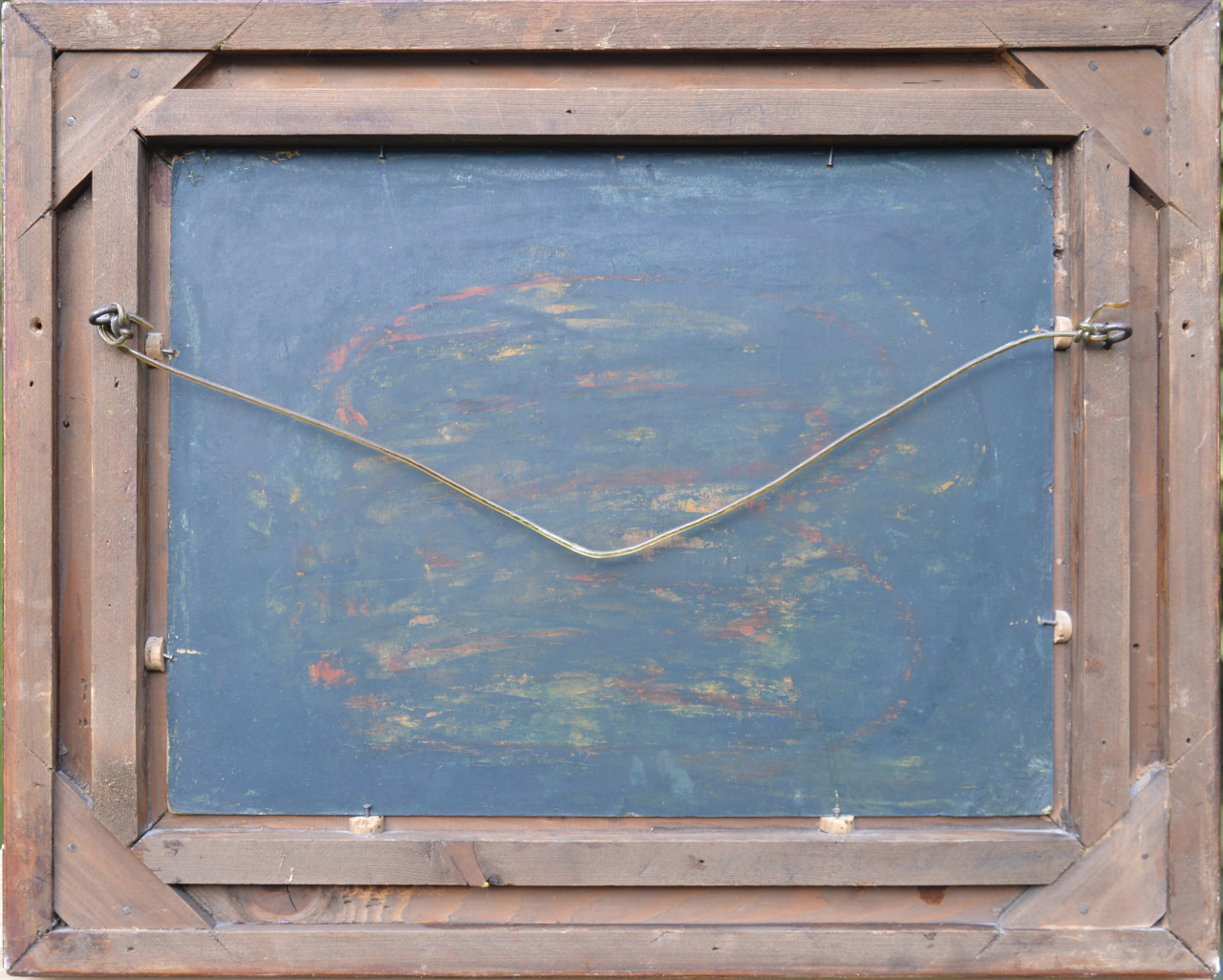
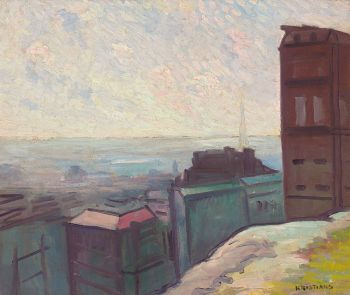
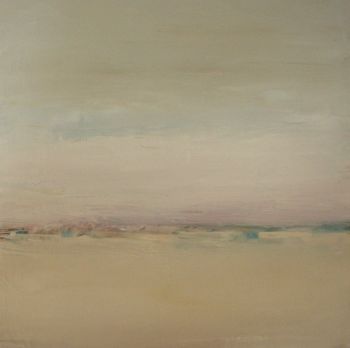
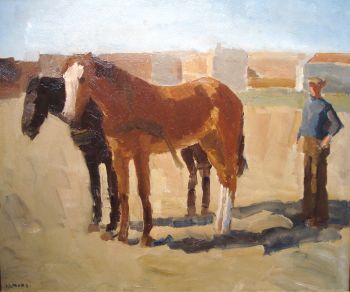
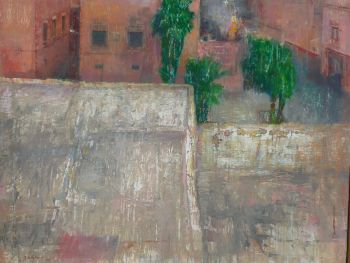
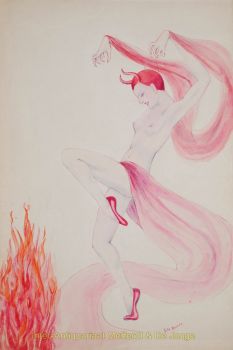
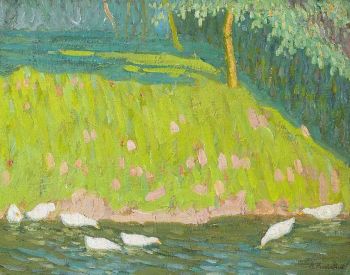
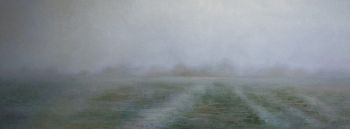
Düsseldorf excavation, around 1912 1912
Artista Sconosciuto
Pittura a olioDipingere
38 ⨯ 28 cm
ConditionVery good
Attualmente non disponibile tramite Gallerease
- A proposito di opere d'arteHarrie Kuyten was born in Utrecht. When the young Harrie Kuyten loses both parents at the age of thirteen, he goes to an orphanage. There his artistic talent is first noticed. He studied at the academy of visual arts in Antwerp. Approx. 1904-1905. Enjoyed the royal grant for 3 years.
He mainly painted, drew and lithographed figures (many nudes), landscapes, cityscapes, beach and seascapes and still lifes. As a painter he is well known for the use of striking and sensitive colors.
He is often counted as part of the Bergen school. While he was much more autonomous.
Jan Juffermans' monograph states the following:
"A spirited man with an open character, a freebooter, an independent figure, practical and alert enough to earn a good living, even in the very difficult crisis years with painting, his greatest love, for his family and himself. In the land of Van Gogh, where in many eyes all hunger, self-punishment and frustration can lead to the very highest artistic expressions, a painter with such an attitude is soon viewed with suspicion, and Kuyten's uncomplicated way of painting, his playful choice of subjects and his often vivacious color scheme certainly stood in the way of a more general recognition of his work.
In Harrie Kuyten's monograph by Jan Juffermas, page 27 shows an image of a sand quarry in Düsseldorf, 1912. This work is closely related to this image. That is why I also place this work around this time as being a sand excavation there.
Sources: de rode Scheen, Lexicon Dutch Visual Artists, 1750-1950: Harrie Kuyten by Jan Juffermans. - A proposito di opere artista
Può succedere che un artista o un creatore sia sconosciuto.
Alcune opere non sono determinate da chi sono state realizzate o sono state realizzate da (un gruppo di) artigiani. Esempi sono statue dell'antichità, mobili, specchi o firme non chiare o leggibili ma anche alcune opere non sono affatto firmate.
Inoltre puoi trovare la seguente descrizione:
•"Attribuito a …." A loro avviso probabilmente opera dell'artista, almeno in parte
•“Studio di ….” o “Officina di” A loro avviso un'opera eseguita nello studio o nella bottega dell'artista, eventualmente sotto la sua supervisione
•“Cerchio di…” A loro avviso un'opera del periodo dell'artista che mostra la sua influenza, strettamente legata all'artista ma non necessariamente al suo allievo
•"Stile di..." o "Seguace di..." A loro avviso un'opera eseguita nello stile dell'artista ma non necessariamente da un allievo; può essere contemporaneo o quasi contemporaneo
•“Modalità di…” A loro avviso un'opera nello stile dell'artista ma di epoca successiva
•"Dopo …." A loro avviso una copia (di qualsiasi data) di un'opera dell'artista
•“Firmato…”, “Datato…” o “Iscritto” A loro avviso l'opera è stata firmata/datata/inscritta dall'artista. L'aggiunta di un punto interrogativo indica un elemento di dubbio
•"Con firma....", "Con data...", "Con iscrizione..." o “Riporta firma/data/iscrizione” a loro avviso la firma/data/iscrizione è stata aggiunta da qualcuno diverso dall'artista

Artwork details
Related artworks
- 1 - 4 / 12
- 1 - 4 / 24
- 1 - 4 / 24