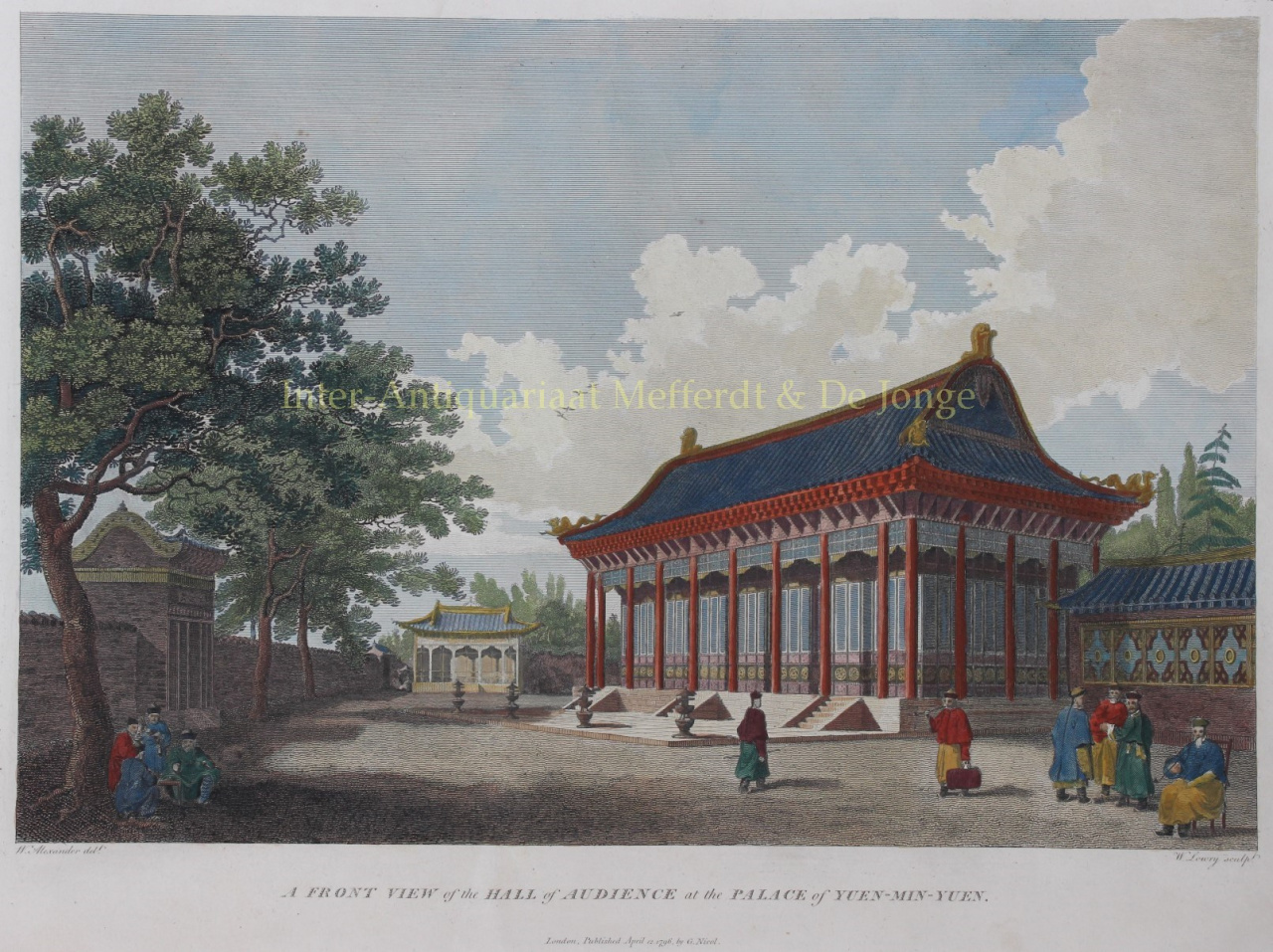
China keizerlijk paleis aan Willem Alexander 1796
William Alexander
€ 195
Inter-Antiquariaat Mefferdt & De Jonge
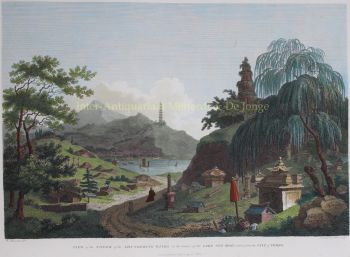
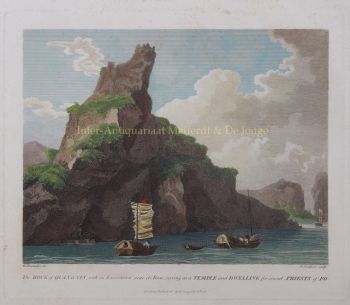
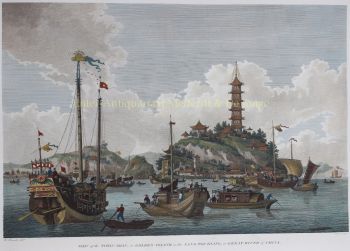
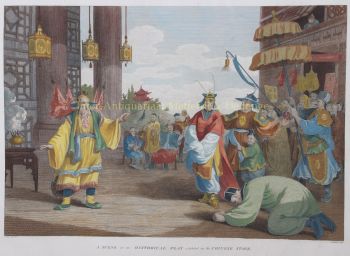
- Over kunstwerk“A Front View of the Hall of Audience at the Palace of Yuen-Min-Yuen” Copper engraving by Wilson Lowry after a drawing by William Alexander (1767-1816 ) from the “Authentic account of an embassy from the King of Great Britain to the Emperor of China; including cursory observations made, and information obtained, in travelling through that ancient empire” written by Sir George Leonard Staunton and published April 12, 1796 in London by G. Nicol. Coloured by a later hand. Size (image): 23,9 x 35,8 cm. The embassy was headed by Earl George Macartney (1737-1806), who was dispatched to Beijing in 1792. He was accompanied by Staunton a medical doctor as his secretary, and a retinue of suitably impressive size, including Staunton’s 11-year-old son who was nominally the ambassador’s page. On the embassy’s arrival in China it emerged that the 11-year-old was the only European member of the embassy able to speak Mandarin, and thus the only one able to converse with the Emperor. Lord Macartney's embassy was unsuccessful, the Chinese resisting British overtures to establish diplomatic relations in view of opening the vast Chinese realms to free trade, but it opened the way for future British missions, which would eventually lead to the first Opium War and the cession of Hong Kong to Britain in 1842. It also resulted in this invaluable account, prepared at government expense, largely from Lord Macartney's notes, by Staunton, of Chinese manners, customs and artifacts at the height of the Qing dynasty. The engravings are of special interest because of their depiction of subjects that very few Europeans had heard of or seen, showing how advanced Chinese civilisation was on a technical, artistic and organizational level. Staunton describes the the hall of audience as follows: "The outside of this hall had a magnificent appearance. The approach to it was thro three quadrangular courts, surrounded by buildings, separated from each other. It was erected upon a platform of granite, raised about four feet above the level of the court before it. Its projecting roof was supported upon two rows of large wooden columns, the shafts of which were painted red, and varnished; and the capitals ornamented with various scrolls and devices, in vivid colouring, particularly with dragons, whose feet were armed with five claws each. Dragons may be marked on the edifices and furniture of the princes of the Emperor's court, but with four claws only to their feet; the fifth is reserved for his Imperial Majesty alone. A net of gilt wire, scarcely perceptible, is spread over the whole entablature of the building, to prevent birds from resting upon any of the projecting points, of which a great number are brought out in a regular order." Price: Euro 195,-
- Over kunstenaar
William Alexander (1767-1816) was de enige Engelse kunstenaar van de late achttiende eeuw die het binnenland van China bereikte, een reis die bepalend zou zijn voor zijn carrière en zijn reputatie zou vestigen. Geboren in Maidstone, Kent, als zoon van een wagenmaker, toonde hij al vroeg artistiek talent en studeerde hij in Londen, mogelijk bij Julius Caesar Ibbetson, voordat hij naar de Royal Academy Schools ging.
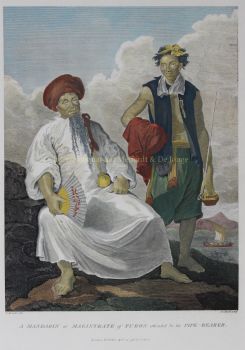
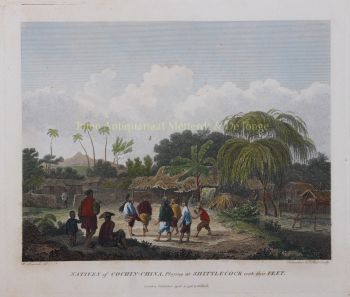
In 1792 trad Alexander toe tot de Britse ambassade van Lord Macartney in China als junior tekenaar. Hoewel de diplomatieke missie er niet in slaagde duurzame handelsbetrekkingen met keizer Qianlong tot stand te brengen, leverde het Alexander buitengewoon veel materiaal uit de eerste hand op. In een tijd waarin de Chinoiserie Europa in zijn greep hield, oogstten zijn gedetailleerde aquarellen van Chinese landschappen, architectuur en het dagelijks leven veel lof. Veel van zijn werken werden gegraveerd voor het officiële verslag van de ambassade en voor publicaties zoals View of the Headlands, Islands, etc. (1798) en John Barrows A Voyage to Cochin China (1806).
Terug in Engeland verfijnde Alexander zijn Chinese schetsen tot tentoonstellingsstukken voor de Royal Academy en werkte hij binnen de levendige aquarelkring rond Dr. Monro, samen met kunstenaars als Thomas Girtin. In 1802 werd hij hoogleraar Landschapstekenen aan de Royal Military Academy in Great Marlow.
In 1808 nam hij ontslag om een van de eerste conservatoren van het British Museum te worden, waar hij diende als beheerder van prenten en tekeningen en assistent-bibliothecaris. Daar begon hij met het samenstellen van de eerste inventaris van prenten en tekeningen van het museum en illustreerde hij belangrijke antiquiteiten uit de Townley-collectie. Als lid van de Society of Antiquaries wijdde Alexander zich later steeds meer aan pittoreske landschappen en studies van klassieke objecten.
Hij stierf in 1816 in Maidstone, op 49-jarige leeftijd. Tegenwoordig bevindt zijn werk zich in belangrijke openbare collecties, waaronder de British Library, Tate en het Victoria and Albert Museum, en blijft het een onschatbare visuele weergave van het laat-18e-eeuwse China, gezien door Britse ogen.

Bent u geïnteresseerd om dit kunstwerk te kopen?
Artwork details
Related artworks
- 1 - 4 / 12
- 1 - 4 / 24
- 1 - 4 / 12