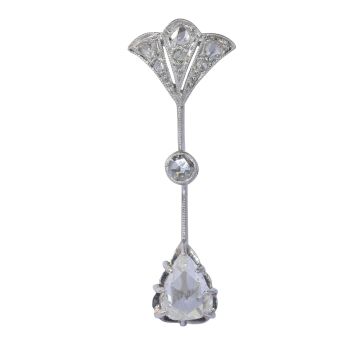
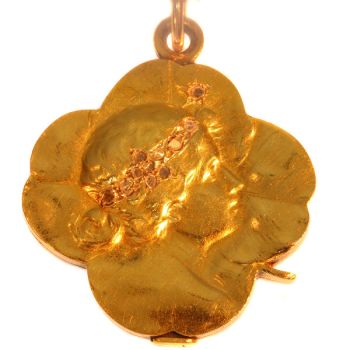
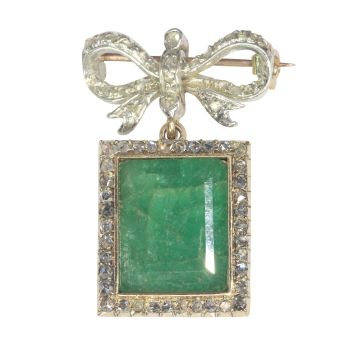
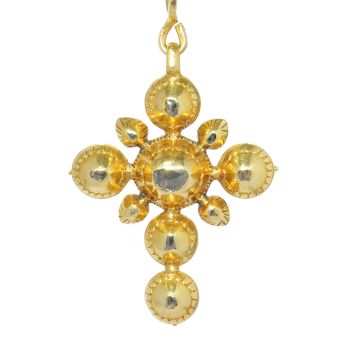
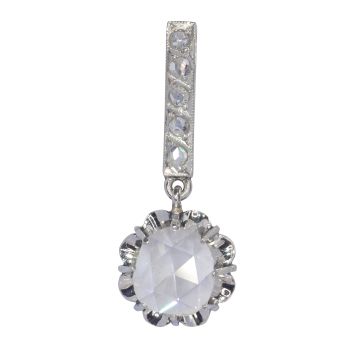
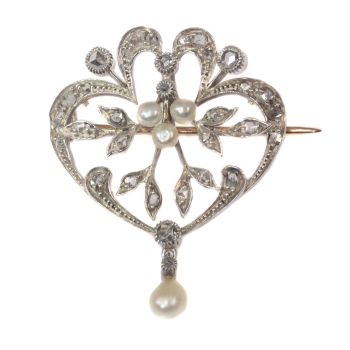
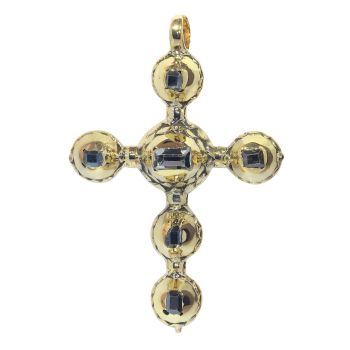
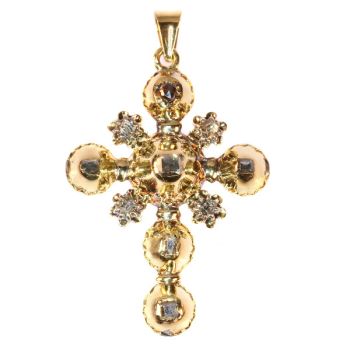
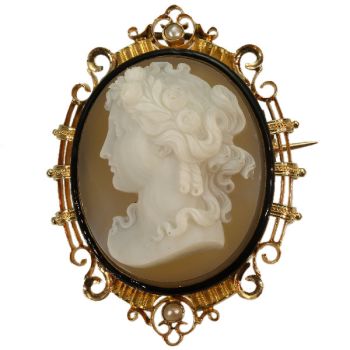
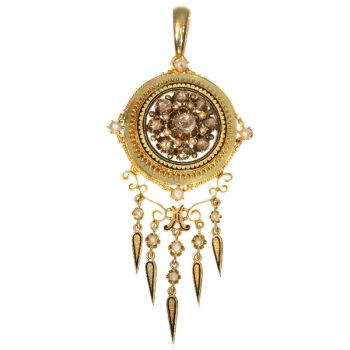
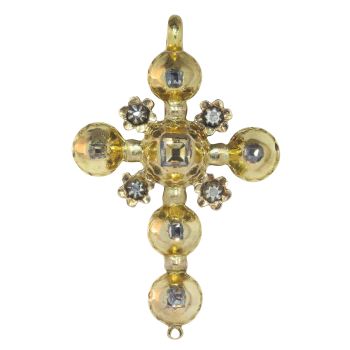
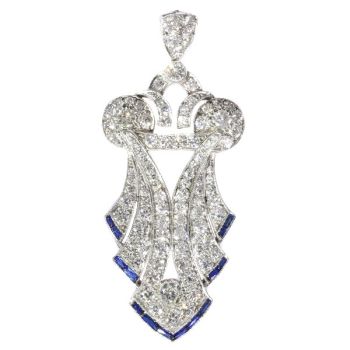
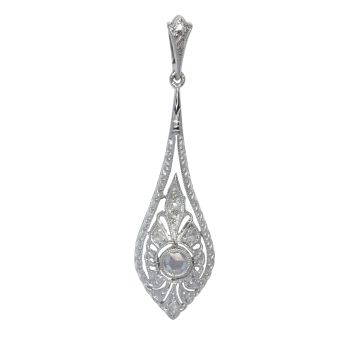
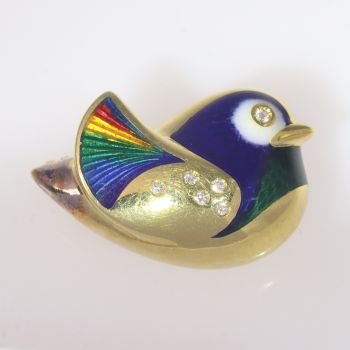
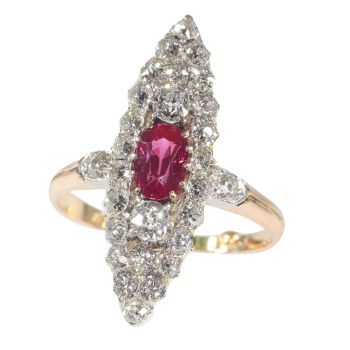
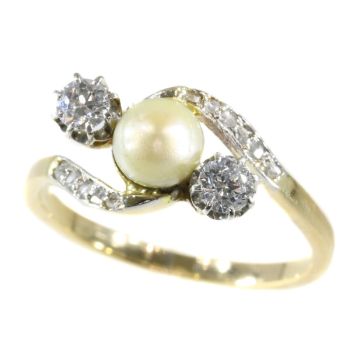
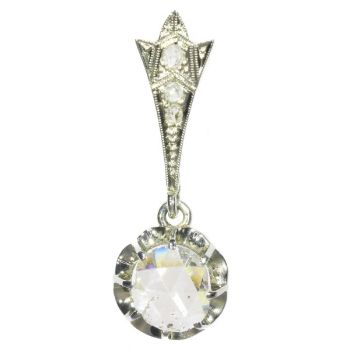
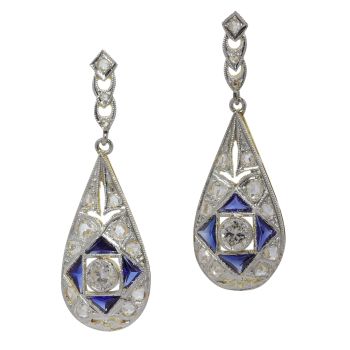
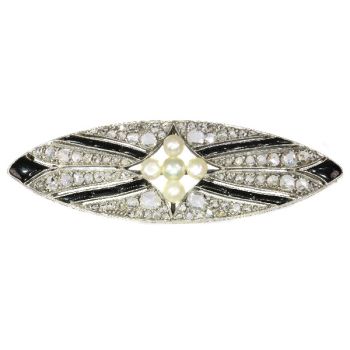
Antique jewelry object group
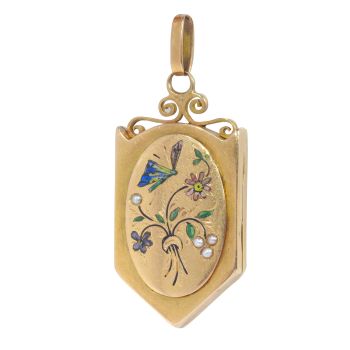
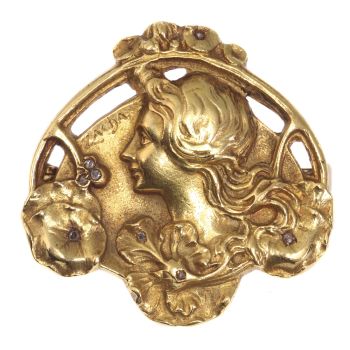
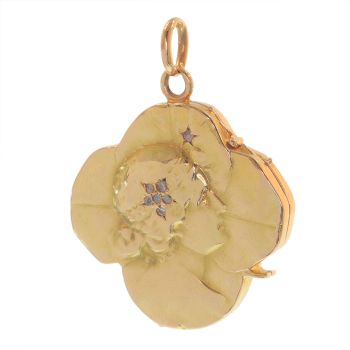
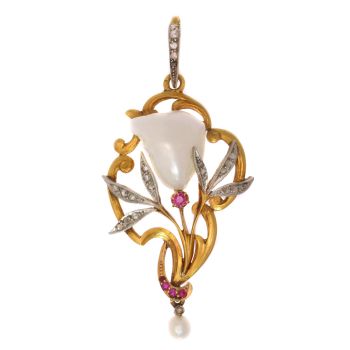
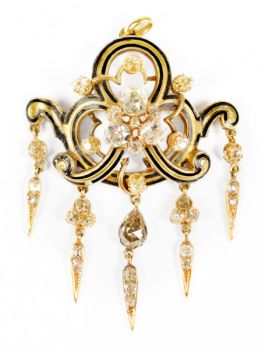
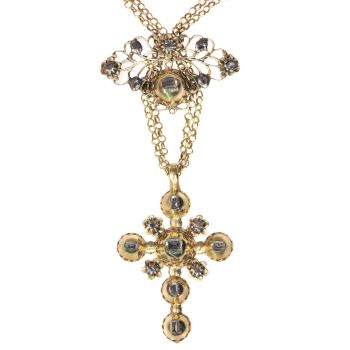
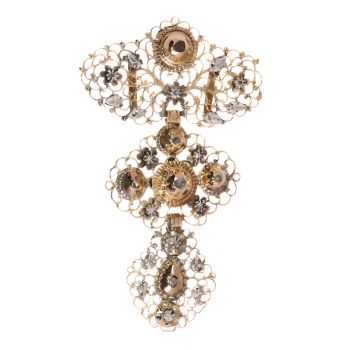
pendant on chain
Condition
very good condition
more info on our condition scale
Country of origin
unknown
Style
Art Nouveau - Art Nouveau (French for New Style) is an international movement and style of art, architecture and applied art - especially the decorative arts - that peaked in popularity at the turn of the 20th century (1890–1905).
The name "Art Nouveau" is French for "new art". It is also known as Jugendstil, German for "youth style", named after the magazine Jugend, which promoted it, and in Italy, Stile Liberty from the department store in London, Liberty & Co., which popularised the style, and in Holland as “Sla-olie-stijl”, Dutch for “salad oil style” after a advertisement poster for this product that was made in that style.
A reaction to academic art of the 19th century, it is characterized by organic, especially floral and other plant-inspired motifs, as well as highly stylized, flowing curvilinear forms. Art Nouveau is an approach to design according to which artists should work on everything from architecture to furniture, making art part of everyday life. Although Art Nouveau fell out of favour with the arrival of 20th-century modernist styles, it is seen today as an important bridge between the historicism of Neoclassicism and modernism.
See also: Art Nouveau
more info on styles
Style specifics
Art Nouveau - Although Art Nouveau took on distinctly localised tendencies as its geographic spread increase some general characteristics are indicative of the form. A description published in Pan magazine of Hermann Obrist's wall-hanging Cyclamen (1894) described it as "sudden violent curves generated by the crack of a whip", which became well known during the early spread of Art Nouveau.
Subsequently, not only did the work itself become better known as The Whiplash, but the term "whiplash" is frequently applied to the characteristic curves employed by Art Nouveau artists. Such decorative "whiplash" motifs, formed by dynamic, undulating, and flowing lines in a syncopated rhythm, are found throughout the architecture, painting, sculpture, and other forms of Art Nouveau design.(from: Wikipedia)
Period
ca. 1900
Events & facts of this era, poetry of this era, fashion of this era.
Source of inspiration
Mother Nature
Material
18K yellow gold (touchstone tested)
more info on precious metals
Technique
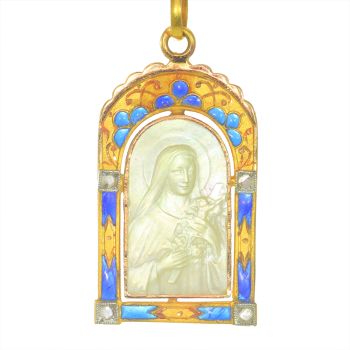
Enamelling is an old and widely-adopted technology. The ancient Egyptians applied enamels to pottery and stone objects. The ancient Greeks, Celts, Russians, and Chinese also used enameling processes on metal objects. Enamel is the colorful result of fusing powdered glass to a substrate by firing, usually between 750 and 850 degrees Celsius. The powder melts and flows and hardens to a smooth, durable vitreous coating on metal, glass or ceramic. According to some sources, the word enamel comes from the High German word smelzan (to smelt) via the Old French esmail. Used as a noun, "an enamel" is a usually small decorative object, coated with enamel coating, such as a champlevé or a cloisonné (different techniques).
Diamonds
Three rose cut diamonds. We do not have the weight of the diamonds which is normal in our trade when it comes to rose cuts.
All diamonds we offer are screened by the I.J.G.C. for whether they are natural or synthetic, and all diamonds in this jewel are 100% guaranteed to be natural.
Precious stones
One natural sapphire with an estimated weight of ± 0.17ct
27natural pearls
All color stone weights are approximate since stones are not removed from their mounts to preserve the integrity of the setting.
It is a very common practice to treat gemstones to intensify their clarity or colour. The item in question has not been tested in this regard.
Birthstones
Diamond is the birthstone (or month stone) for April, sapphire for September and pearl for June.
more info on birthstones
Hallmarks
No trace.
more info on hallmarks
Dimensions
width pendant 3,24 cm (1,28 inch), length necklace 48,00 cm (18,90 inch)
see picture with a ruler in millimeters and inches
Weight
12,70 gram (8,17 dwt)
Adin Reference Nº
22026-0001
Copyright photography
Adin, fine antique jewellery
Additional information
our latest acquisitions
jewelry glossary
wall of fame
visit us in Antwerp
subscribe to our mailinglist