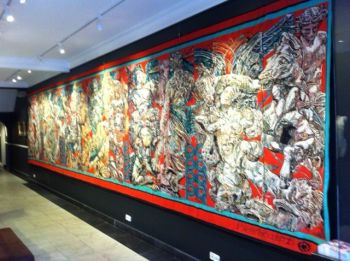
A handmade ‘Rölakan’ rug, model ‘Vårflöden’ (Spring flows) – JJ Vävateljén, Sweden 1960 - 1969
Judith Johansson
TêxtilLã
180 ⨯ 230 cm
ConditionGood
€ 2.950
Van Kerkhoff Art
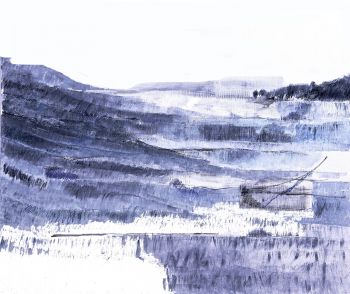
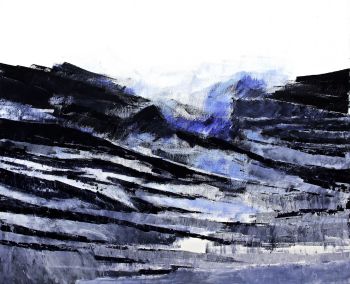
- Sobre arteA handmade ‘Rölakan’ (flat weave) rug, model ‘Vårflöden’ (Spring flows). Designed by Judith Johansson and handmade by her at JJ Vävateljén, Sweden ca 1960.
Rölakan rugs are a traditional type of Swedish flat-weave rug that have been produced for centuries. Unlike pile rugs, rölakan rugs are woven flat, without knots, using a tapestry-like technique. The weft threads are passed over and under the warp threads to create the design. Designs are usually geometric or stylized, sometimes inspired by folk art, nature, or Scandinavian motifs. Traditional patterns include diamonds, stripes, and floral or tree motifs.
In the 20th century, designers like Judith Johansson and others modernized the technique, incorporating contemporary motifs and abstract designs while maintaining traditional weaving methods. Today, rölakan rugs are appreciated both as folk art and design objects and vintage Rölakan rugs are highly collectible, particularly mid-century examples from Swedish ateliers that blended traditional craft with modern design aesthetics.
About Judith Johansson
Judith Johansson (1916 Trollhättan – 1993 Knäred) was a Swedish textile artist renowned for her contributions to mid-20th-century Scandinavian rug design. Born in 1916 in southern Sweden, she grew up in a rural environment that deeply influenced her aesthetic sensibilities. Her maternal grandmother, a skilled weaver, introduced her to the craft at an early age, instilling in her a lifelong appreciation for textiles.
In 1937, Judith married John Johansson, and together they established JJ Vävateljén, a weaving studio in Knäred, Halland. Over the next five decades, they produced an extensive collection of over 400 rug and tapestry designs, both ecclesiastical and secular. Their work was characterized by a harmonious blend of traditional Swedish craftsmanship and modern design principles.
Johansson’s designs often drew inspiration from the natural landscapes of Sweden, incorporating elements such as rolling hills, forests, and lakes into her compositions. She employed a variety of weaving techniques, including the traditional Swedish flat-weave method known as röllakan, to create textures that added depth and interest to her pieces.
Throughout her career, Johansson’s work was recognized for its artistic merit and technical proficiency. Her rugs and tapestries were featured in various exhibitions and were sought after by collectors and institutions alike. In the mid-1980s, her daughter took over the atelier, continuing the family legacy in textile design.
Judith Johansson passed away in 1993, leaving behind a legacy of finely crafted textiles that continue to be celebrated for their beauty and craftsmanship.
Marked
Signed "JJ"
Execution
JJ Vävateljén, Sweden ca 1960
Condition
Good original condition. Wear consistent with age and use, Rewired.
Literature
Torsten Andersson, JJ Så vävdes ett livsverk
Dimensions
Width 180 cm
Length 230 cm - Sobre artista
Judith Johansson (1916–1993) foi uma influente artista têxtil, designer e tecedeira sueca, mais conhecida pelos seus tapetes e tapeçarias de trama plana que unem o artesanato tradicional escandinavo ao design moderno de meados do século XX. Ativa principalmente desde o final da década de 1940 até meados da década de 1960, Johansson criou um extenso conjunto de têxteis eclesiásticos e seculares que são hoje considerados obras exemplares da arte têxtil moderna sueca.
Nascida numa pequena aldeia rural no sul da Suécia, região de renome pelas suas antigas tradições têxteis e de tecelagem, Judith Johansson manteve-se intimamente ligada ao seu meio local ao longo de toda a sua vida. Estabeleceu o seu atelier nessa região, onde viveu e trabalhou durante décadas. A oficina tornou-se um centro de produção criativa e foi posteriormente continuada pela sua filha em meados da década de 1980, sublinhando a natureza intergeracional do legado artístico de Johansson. Johansson desempenhou um papel ativo no renascimento regional dos tapetes röllakan de trama plana e dos estofos decorativos, contribuindo significativamente para o ressurgimento do design têxtil sueco no pós-guerra.
Johansson desenvolveu um processo de design singular, no qual traduzia delicados esboços em aguarela em padrões de tecelagem contemporâneos. Centenas destas aguarelas originais ainda se conservam no seu atelier, oferecendo uma visão rara do seu método criativo e pensamento visual. Embora grande parte do seu trabalho se inspire na paisagem rural sueca — os seus ritmos, cores e formas naturais —, também produziu composições geométricas arrojadas e abstrações florais estilizadas que a alinham firmemente com a estética moderna de meados do século XX.
Entre as suas obras mais inovadoras estão designs experimentais como o tapete Tjärmark, caracterizado por composições sem bordas e paletas de cores ricas em tons de gema que refletem o espírito do modernismo escandinavo. Os seus têxteis equilibram estrutura e suavidade, tradição e experimentação, tornando-os decorativos e conceptualmente inovadores.
Johansson desenvolveu um processo de design singular, no qual traduzia delicados esboços em padrões de cores vibrantes. As conquistas artísticas de Judith Johansson foram formalmente reconhecidas na década de 1980, quando recebeu vários prémios de prestígio pela sua contribuição para a arte têxtil sueca. As obras que ela desenhou e teceu ostentam a marca registada “JJ”, uma assinatura que hoje significa autenticidade, habilidade artesanal e qualidade duradoura. Johansson é hoje amplamente considerada uma figura importante no design sueco do século XX, cujos tapetes e tapeçarias continuam a ser valorizados por colecionadores, instituições e admiradores dos têxteis modernos escandinavos.

Você está interessado em comprar esta obra de arte?
Artwork details
Related artworks
Arne Jacobsen
A vintage ‘Swan’ sofa, model 3321 – Fritz Hansen, Denmark1970 - 1979
Preço em pedidoVan Kerkhoff Art
1 - 4 / 24- 1 - 4 / 24
- 1 - 4 / 24
- 1 - 4 / 12