Hessel de Boer
BiographyAbout the artist
Hessel de Boer (Haarlem, 20 February 1921 – The Hague, 20 July 2003) was a Dutch painter and draughtsman, best known for his portraits, cityscapes and landscapes. His work is characterised by an impressionist style and a refined technique.
Education and influences
De Boer studied at the Royal Academy of Art in The Hague, where he was taught by renowned teachers such as Paul Citroen, Rein Draijer and Willem Schrofer. These teachers influenced his development and contributed to his refined technique and sense of composition.
Artistic career
After graduating in 1942, De Boer settled in The Hague, where he played an active role in the local art circuit. He became a member of the Haagse Kunstkring and Pulchri Studio, two leading artists' associations in the city. His work was regularly exhibited, including in the Singer Museum in Laren.
In 1954, De Boer received an honourable mention from the Willink van Collenfonds, an award for promising artists under the age of 35. He also won the audience award of the 'Haagse Salon' several times, which testifies to his popularity and appreciation among the public.
Style and theme
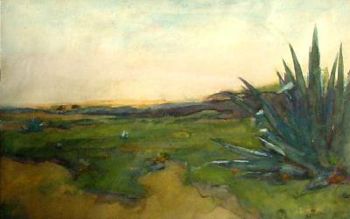
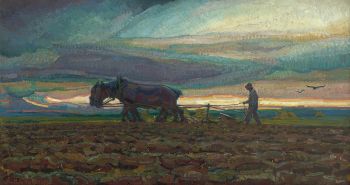
De Boer's oeuvre includes a wide range of subjects, including portraits, still lifes, interiors and cityscapes. The Hague was a recurring theme in his work; he captured the city in different seasons and moods, using a fine stippling technique to capture the play of light and shadow. His sun-drenched cityscapes show an impressionist influence and can compete with the work of pointillists such as Jacob Nieweg and Ferdinand Hart Nibbrig.
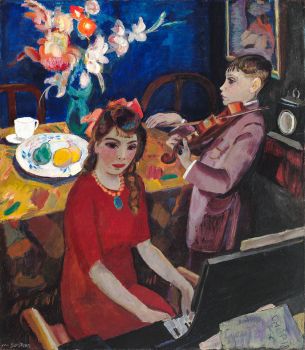
As a portrait painter, De Boer strove to show more than just a likeness; he sought the essence and character of the person portrayed. His psychologically empathetic portraits testify to a deep insight into human nature.
Teaching and legacy
In addition to his work as an artist, De Boer was a teacher at the Vrije Academie in The Hague, where he inspired and mentored many young artists. His dedication to figurative art remained unchanged, even in a time when abstraction prevailed. He strongly believed in the survival of the figurative tradition and passed this belief on to his students.
Hessel de Boer died on 20 July 2003 in The Hague. His work remains valued for its technical skill and emotional depth, and contributes to the rich cultural heritage of Dutch painting.
Artworks
Filter Artworks
1 artwork for sale by Hessel de Boer

Related artworks for sale







Jean-François Rauzier
Real Cabinete - Limited edition of 8 2017
Price on requestVilla del Arte Galleries