Johannes Tavenraat
BiographyAbout the artist
Johannes Tavenraat (Rotterdam, 1809 – Rotterdam, 1881) was a Dutch painter, draughtsman and graphic artist, best known for his romantic landscapes and imaginative vistas, often imbued with a melancholic atmosphere and historical significance. He belongs to the group of 19th-century painters who gave romanticism in the Netherlands its own face, with a preference for the sublime, the ruinous and the narrative in nature.
Tavenraat studied at the drawing academy in Rotterdam and made study trips to Germany, where he was strongly influenced by German romanticism and the painting of the Nazarenes. His work was characterised by dramatic light-dark contrasts, rugged mountain landscapes, Gothic ruins, old castles and figures in historical costumes. He thus brought to life a kind of dream world in which nature and history merge into one poetic whole.
At a time when Dutch painting generally focused on realism and direct observation, Tavenraat consciously opted for the symbolic and the intensified. His paintings evoke feelings of transience, wonder and nostalgia, often without an explicit storyline but with a clear emotional charge. This makes him one of the more expressive and imaginative artists of his generation.
Although his style later fell out of fashion with the rise of impressionism and naturalism, he was appreciated and exhibited during his lifetime, including in Rotterdam and Amsterdam. He was also active as an etcher and also showed a powerful imagination in his graphics.
Johannes Tavenraat leaves behind a romantic and idiosyncratic oeuvre, which is distinguished by his imaginative vision, technical skill and penchant for the mysterious. In his work, a voice resounds that searches for beauty beyond the visible, rooted in imagination, memory and romantic longing.
Related artworks for sale





Eric de Nie
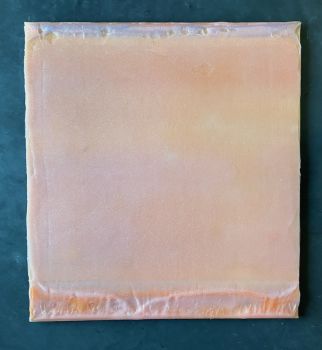
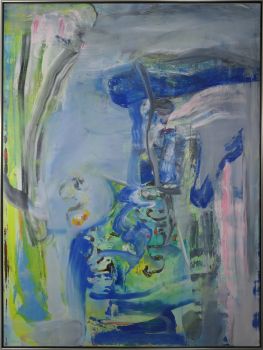
Abstract composition in yellow and blue1990 - 2010
Price on requestBruning Heintz Fine Art