About the artist
Lee Miller (1907–1977) was an American photographer, photojournalist, and Surrealist artist whose life and work traversed some of the most defining cultural and historical moments of the twentieth century. Renowned for her striking transition from celebrated fashion model to pioneering image-maker, she forged a career marked by reinvention, courage, and artistic innovation.
Miller began in front of the camera as a Vogue model in 1920s New York before moving to Paris, where she became closely associated with the Surrealist circle and collaborated with Man Ray. During this period, she co-developed the solarization technique, producing dreamlike, experimental images that challenged conventional photography and established her as a serious artist in her own right.
In the 1940s, Miller radically shifted her path, becoming a war correspondent for Vogue. She documented the devastation of World War II with unflinching honesty, capturing the liberation of Paris, the horrors of concentration camps such as Dachau concentration camp, and the aftermath of conflict across Europe. One of her most iconic images—taken in Munich—shows her in Adolf Hitler’s bathtub, a haunting juxtaposition of intimacy and historical rupture.
Throughout her life, Miller’s work balanced beauty and brutality, intimacy and distance. Whether in surreal compositions or stark war imagery, she maintained a distinctive visual language grounded in curiosity, resilience, and a refusal to look away. Today, she is recognized not only as a key figure in Surrealism but also as one of the most important female war correspondents and photographers of the twentieth century.
Related artworks for sale





Coderch and Malavia
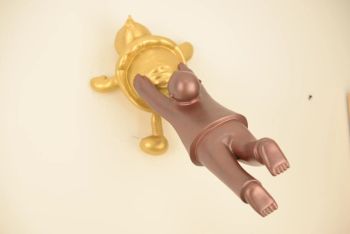
Forest Guardian - Monumental (ed.1/8)2025
Price on requestVilla del Arte Galleries


Nobuyoshi Araki (荒木経惟)
MONSTROUS PARADISE #1502015
Price on requestEuropean Cultural Centre Collection

Nobuyoshi Araki (荒木経惟)
MONSTROUS PARADISE #0062015
Price on requestEuropean Cultural Centre Collection