About the artist
Marie Wandscheer (1856–1936) was a Dutch artist who occupied a unique position in the painting of her time with her refined paintings, pastels and etchings. She was born on 9 November 1856 in Amsterdam as the daughter of Johan Frederik Christiaan Wandscheer, director of a shipping company, and Anna Christina Pilger. She remained unmarried all her life and chose a life that was completely dedicated to art.
Her artistic education began with Valentijn Bing and was further developed at the Rijksakademie van Beeldende Kunsten, where she studied for ten years with the influential painter and teacher August Allebé. During these formative years, Wandscheer developed her technical craftsmanship and her preference for intimate, tranquil scenes. She approached her subjects — often women, children, flowers and interiors — with a sensitive eye for atmosphere and detail.
From 1892 to 1895, Marie lived in Nieuwer-Amstel, after which she settled in Ede, where she remained for the rest of her life. In Ede, she came into contact with the painter and etcher Willem Witsen, from whom she took lessons and with whom she maintained a close friendship. She also maintained close ties with Lizzy Ansingh, a prominent representative of the so-called Amsterdamse Joffers — a group of female artists who conquered their place in the art world in an idiosyncratic way. Although Wandscheer did not belong to the core of this group, she is often considered to be one, because of her style, subjects and social circle.
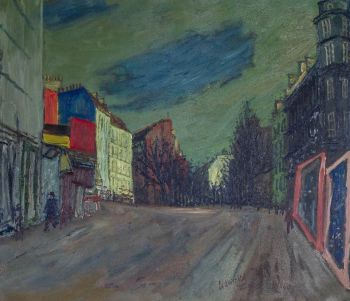
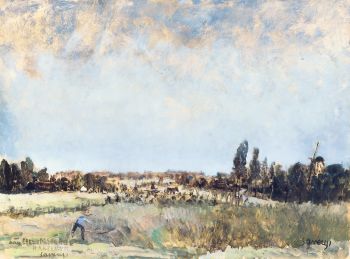
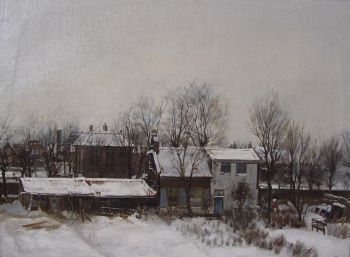
Wandscheer worked in a naturalistic style, with influences from Impressionism. In addition to paintings, she also made pastels and etchings. Her oeuvre is characterized by a subdued atmosphere and great technical precision. She emphasized beauty in the everyday, and her work testifies to a deep empathy for her subjects.
She was an active member of artists' associations such as Arti et Amicitiae and Pulchri Studio, and exhibited during her lifetime at various locations in Amsterdam, The Hague, Rotterdam, Ede and at the Renkum artists' association Pictura Veluvensis. Her work was appreciated for its tranquility and craftsmanship, but after her death her name was somewhat forgotten.
Nevertheless, there has been a renewed interest in her work in the 21st century. In 2006, an exhibition was organised in the Historical Museum Ede under the title Marie Wandscheer weer aan de wand — a fitting tribute to an artist who, averse to grand gestures, found strength in the small and the personal.
Marie Wandscheer died in 1936 in Ede. Her work lives on as a silent witness to female artistry, connection with her environment and a life dedicated to beauty and observation.
Artworks
Filter Artworks
1 artwork for sale by Marie Wandscheer