About the artist
Pieter Hermanus d'Hont (Hilversum, 24 April 1917 – Utrecht, 12 June 1997) was a leading Dutch sculptor, known for his versatile and expressive works that have enriched the Dutch streetscape. As the unofficial city sculptor of Utrecht, he left a lasting impression with numerous sculptures that are still admired today.
D'Hont began his artistic training at the Rijksakademie van beeldende kunsten in Amsterdam, where he studied under the guidance of Jan Bronner. Bronner's philosophy of "art in the service of society" had a lasting influence on d'Hont's approach to sculpture. His early work was characterized by figurative and classical forms, often integrated into architectural structures, which was typical of the Amsterdam School style.
One of d'Hont's most iconic works is the bronze statue of Anne Frank from 1959, located at the Janskerkhof in Utrecht. This statue attracts visitors every day who pay tribute to the young war victim.
In addition, d'Hont designed the Edison statuette, which has been awarded annually since 1960 during the Edison Music Awards, one of the oldest music awards in the Netherlands.
His oeuvre also includes monumental works such as the fountain in Zwijndrecht and the impressive relief in the RIVM building in Bilthoven, a collaboration with Arie Teeuwisse. These works demonstrate his skill in both freestanding sculptures and integrated architectural elements.
D'Hont was a much sought-after portraitist and immortalized many prominent Dutch people, including Queen Beatrix. His portraits are known for their accuracy and ability to capture the character of the person portrayed.
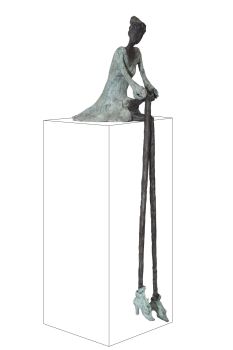
Over the years, d'Hont's style evolved from polished, figurative forms to more expressive and textured surfaces. He made the structure of the clay an integral part of the expressive power of the image, resulting in works with a strong poetic aura.
Artworks
Filter Artworks
4 artworks for sale by Pieter d'Hont