About the artist
Jacob Jan van der Maaten was born on 4 January 1820 in the fortified town of Elburg, on the edge of the Veluwe. He became one of the leading Dutch landscape painters of the 19th century, known for his lovely, light-flooded depictions of the countryside — imbued with romanticism, but firmly rooted in reality. His works exude peace, light and rural harmony.
Van der Maaten was educated at the Royal Academy of Art in Amsterdam, where he was taught by, among others, the famous history painter Jan Willem Pieneman. However, he soon chose his own path and focused on the landscape — a genre in which he could fully express himself. He joined Arti et Amicitiae, where he played an active and valued role for many years.
His landscapes often show wide, open meadows, groups of trees in soft sunlight, grazing cows, sandy paths and cloudy skies. People appear in his work, but always small, embedded in the larger whole of nature. His style is slightly romantic: he idealized the countryside without making it sentimental, with a great sensitivity to atmosphere and the seasons.
His most famous painting, Funeral in the Corn (1854), became an immediate public favorite upon completion and is part of the canon of Dutch 19th-century painting. It shows a simple peasant funeral procession making its way through a cornfield, bathed in light — a tranquil, deeply human depiction that is both symbolic and utterly earthly. Vincent van Gogh would later praise the painting in his letters, as an example of true painting “with feeling.”
Van der Maaten was not only a painter, but also a teacher. He had a studio in The Hague, where he mentored many younger artists. He also played a role in the cultural life of his time and campaigned for greater recognition of painting as an independent profession and as a source of national pride.
In his later years he moved to Apeldoorn, where he died on 16 April 1879. His work is still cherished in museum collections today, including the Rijksmuseum and the Kröller-Müller Museum. Jacob Jan van der Maaten left behind an oeuvre that not only depicted the Dutch landscape, but also sang about it: in light, line and colour he told the story of a country in peace and movement.
Related artworks for sale
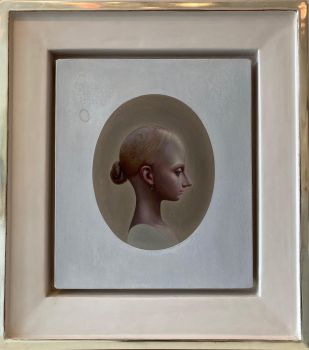


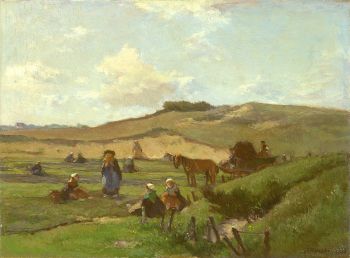
Johannes Evert Akkeringa
'Nettenboetsters' in the Dunes1861 - 1942
Price on requestStudio 2000 Art Gallery