About the artist
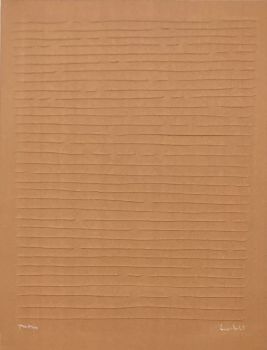
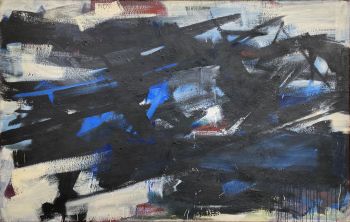
Josef Ongenae (1921–1993) was a Belgian artist who played a significant role in the development of post-war abstract art in the Netherlands. His oeuvre forms a bridge between early abstraction and the austere, geometric visual language that flourished in the 1950s and 1960s. The collection includes 35 of his paintings.
Ongenae began his career in the 1930s as an apprentice draftsman at an advertising agency. During and after the Second World War, influenced by artists such as Kandinsky, Picasso, and Juan Gris, he developed an increasingly abstract visual idiom. A defining moment came in 1951, when he worked temporarily at the Stedelijk Museum Amsterdam. While setting up an exhibition about De Stijl, he first encountered the work of Mondrian. From that point on, his work became more restrained in color and more highly stylized.
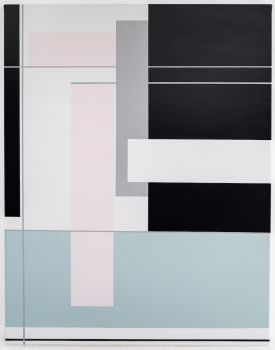
In the 1960s, Ongenae finally found his signature style: dynamic compositions composed of colored rectangles, in which tension and rhythm are central. In 1955, he co-founded the artist collective Liga Nieuwe Beelden, with which he ranked among the innovators of Dutch abstract art. His work demonstrates a consistent quest for order, balance, and movement within the plane.
Artworks
Filter Artworks
1 artwork for sale by Josef Ongenae