Wang Xing-zhi
BiographyAbout the artist
Wang Xing-zhi (b. 1975, China) is a contemporary Chinese artist whose multidisciplinary practice bridges the rich heritage of traditional Chinese painting with the evolving narratives of contemporary visual culture. Born in Sichuan Province, Wang received his formal training at the Sichuan Academy of Fine Arts, where he studied Youhuaji (traditional Chinese meticulous-style painting) from 1994 to 1998. His academic foundation in classical technique remains a crucial underpinning of his work, even as his artistic voice has grown increasingly experimental.
Since 1998, Wang has served as a professor at the Art Institute of Zhejiang University, where he has mentored a generation of emerging Chinese artists. In 2006, he expanded his practice into the field of moving image and visual storytelling through his research affiliation with the Beijing University Institute of the Arts Film School. This academic engagement has deepened his exploration of the intersection between static image and cinematic narrative, evident in his later works that blend painting, photography, and video installation.
Wang’s exhibition history reflects his evolving position within China’s contemporary art movement. He debuted in 2001 at the First Chinese Painting Exhibition and gained early recognition through the Zhejiang Youth Art Exhibition in 2002. His participation in “Library 3818” (2006) signaled a shift toward more conceptual and interdisciplinary projects. The year 2007 marked a prolific period with four distinct exhibitions, including the evocative Image – Fables and Lies, and a collaborative show with Mosquito Chen Hung-chi. That same year, his work was also featured in a national exhibition of higher education art faculty, solidifying his role as both creator and educator.
Wang’s practice often questions the tension between truth and illusion, past and present. His works juxtapose the precision of classical technique with elements of surrealism, metaphor, and social commentary. Through both solitary and collaborative projects, he critiques constructed narratives—whether in media, history, or identity—offering the viewer a poetic yet critical lens on contemporary life.
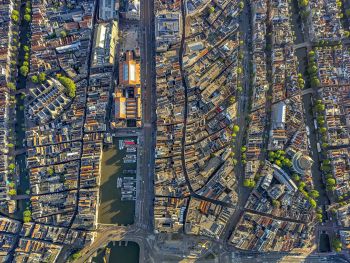
In 2009, Wang’s international presence was solidified when his work was shown in Realisme Amsterdam at the Willem Kerseboom Gallery, introducing European audiences to his unique fusion of tradition and innovation.
Wang Xing-zhi remains a vital voice in Chinese contemporary art: a teacher, a theorist, and an artist who persistently stretches the boundaries of form while remaining anchored in the artistic philosophies of his heritage.