Zhao Nengzhi
BiographyAbout the artist
Born in 1968 in Nanchong, Sichuan Province, Zhao Nengzhi is one of the most intriguing artists of his generation. A graduate of the renowned Sichuan Academy of Fine Arts in 1990, he has since emerged as a strong, idiosyncratic voice in contemporary Chinese art—a voice that refuses to be consumed by the spectacle of cultural clichés or commercial trends. While many of his compatriots have achieved international fame by rehashing political symbolism, Zhao has chosen a more radical path: that of the human soul.
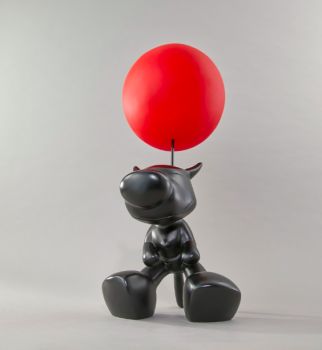
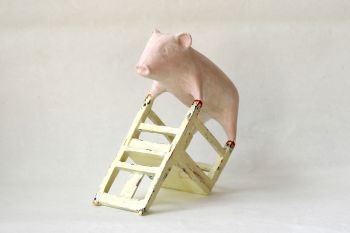
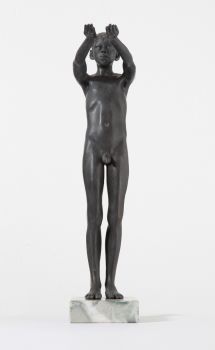
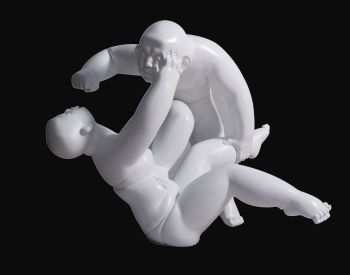
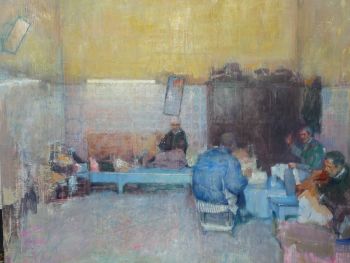
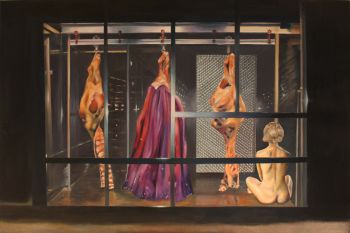
Zhao’s oeuvre is imbued with existential tension. His best-known series, such as Facial Expressions and Bodies in Motion, do not depict heroic figures or socially critical parables, but vulnerable bodies and distorted faces, caught in motion or in an almost suffocating standstill. These bodies are not metaphors, not masks—they are theater. Just as Samuel Beckett in Waiting for Godot presents figures trapped in a meaningless wait, Zhao shows us individuals locked in the vacuum of existence: searching for meaning, without the promise of redemption.
His paintings resemble scenes from a wordless one-act play, full of inner noise. It is not for nothing that Zhao calls his own work a monodrama—a term that refers not only to the loneliness of his characters, but also to the loneliness of the maker himself. There is no irony or satire here, but a deeply felt awareness of the fragility of being human.
In the hyper-commercial context of the Chinese art world—where many artists ‘export’ their identity in exchange for recognition and capital—Zhao remains remarkably unadapted. His work evades the expectations of both the domestic market and the international art scene. And that is precisely what makes him so important. Zhao confronts not with a scream, but with silence. Not with symbolism, but with skin, gesture, and gaze. His figures speak without speaking; they are the scars of life itself.
Despite his relatively limited visibility outside China, Zhao’s work is gaining recognition among curators, collectors, and critics sensitive to his subtle but disruptive power. He is not a maker of icons, but of mirrors—and not the comforting kind.
Zhao Nengzhi is not easy to classify. He is not a political artist, an aesthete, a storyteller. What he offers us is something rarer: a moment of pure possibility, as philosopher Giorgio Agamben calls it. An opening to the experience of being without direction—a reminder of our shared humanity in all its naked imperfection.