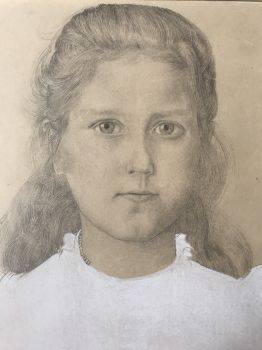
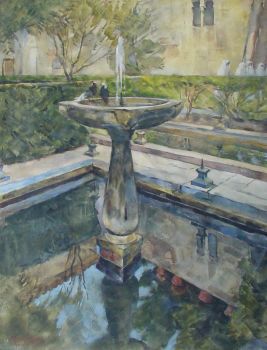
Nicolaas van der Waay (Amsterdam, 15 October 1855 – ibid., 18 December 1936) was a versatile Dutch artist, known as a painter, watercolourist, lithographer and teacher. His oeuvre encompasses a wide range of genres, including portraits, cityscapes and decorative art. He is perhaps best known for his allegorical illustrations for the Golden Coach and a series of paintings depicting the lives of the girls from the Amsterdam Orphanage.
Education and early career
Van der Waay received his first drawing lessons from Louis Koopman, whose daughter he would later marry. From 1871 to 1875 he studied at the Rijksacademie van Beeldende Kunsten in Amsterdam. After graduating he shared a studio with his fellow student Jan Hillebrand Wijsmuller. In 1880 he received the Willink van Collen Prize for his painting "Onder Vrienden", which strengthened his reputation as a promising artist.
Travels and influences
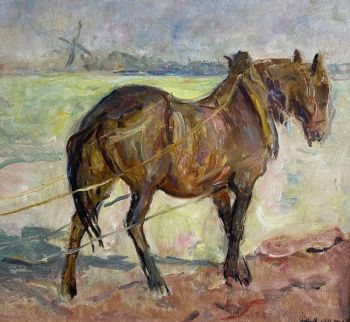
Thanks to a ministerial subsidy, obtained through the mediation of August Allebé, Van der Waay made a study trip to Italy. This trip enriched his artistic perspective and influenced his later work. Around 1900 he came under the influence of Isaac Israëls, which resulted in a looser brushwork and a more impressionistic style.
Teaching and influence
From 1891 to 1927 Van der Waay was a teacher and later professor at the Rijksacademie in Amsterdam, where he led the painting class together with August Allebé. He played a crucial role in the education of a new generation of artists. His best-known students include Lizzy Ansingh, Piet Mondriaan and Jan Sluijters.
Important works and commissions
In 1898 Van der Waay produced a painting of the inauguration of Queen Wilhelmina and he was responsible for the allegorical illustrations on the Golden Coach. In addition, he designed the first official 10-guilder banknote (1904-1920). His painting "Church of Orphan Girls", which is in the collection of the Amsterdam Museum, is one of his most famous works. He made several paintings of these orphan girls in their characteristic red-black clothing.
Style and theme
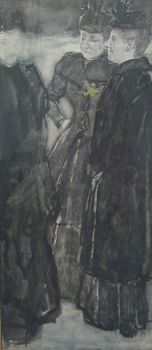
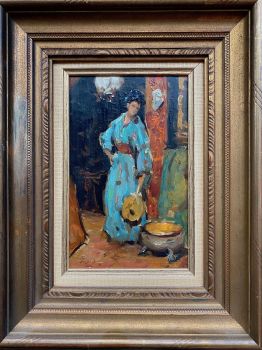
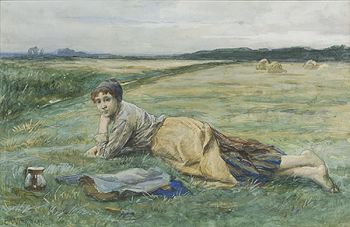
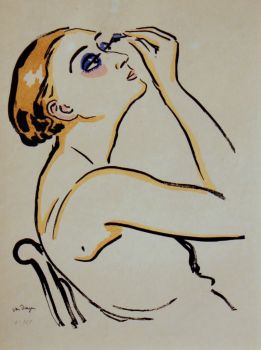
Van der Waay was known for his sophisticated depictions, often with women in the leading role, as well as portraits, landscapes, cityscapes and café scenes. Under the influence of contemporaries such as Isaac Israëls and Max Liebermann, his palette gradually became looser and more impressionistic. Although his painting style was somewhat conservative, he distinguished himself from his conservative academy peers by a looser touch and freer choice of subject.
Memberships and legacy
Van der Waay was a member of artists' societies such as Sint Lucas and Arti et Amicitiae in Amsterdam, where he was actively involved in organising exhibitions and activities. In addition to his painting activities, he was also an illustrator of books. His work is included in the collections of the Rijksmuseum in Amsterdam and Museum Boijmans Van Beuningen in Rotterdam, among others.
Nicolaas van der Waay died on 18 December 1936 in Amsterdam, but left behind a rich artistic heritage that is still appreciated today.