Shinkichi Tajiri, a child of first-generation immigrants to the USA from Japan, spent his childhood in Los Angeles and San Diego. Following the 1941 attack on the US airfield in Hawaii by the Japanese army, Tajiri’s family was sent to the Poston War Relocation Center, an internment camp in Arizona.
In a combination of patriotism and his wish to leave the camp, Tajiri soon volunteered for the army and joined the all-Japanese American regiment, which later became the most decorated regiment of its size in American military history. He subsequently attended the Chicago Art Institute from 1946 to 1948, also working for the sculptor Isamu Noguchi in New York.
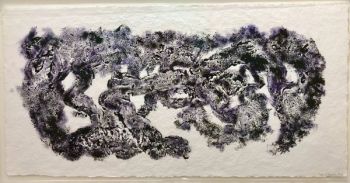
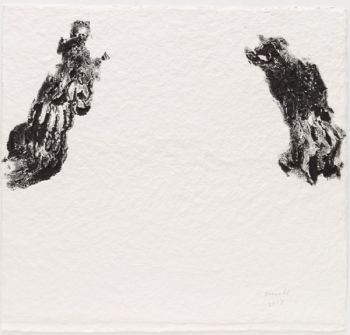
In 1949 he moved to Paris and studied with Ossip Zadkine and Fernand Léger. Primarily a sculptor, Tajiri also made a number of award-winning films, videos, stereo and panoramic photos and works on paper.
Shinkichi Tajiri saw the war as catalyst for his becoming an artist and he regarded his imagery as a way of crystallising his war experiences. The main themes of his work are speed, erotica and violence in an ongoing confrontation with the tragedies of the Second World War and its aftermath.
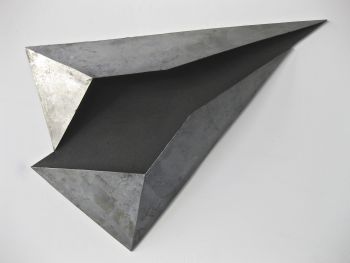
In 1967 and 1968 he made a series of sculptures entitled Machines as a form of protest against the violence of the Vietnam War. Machine No 7 1967–8 is a steel, aluminium, Plexiglas and chromed iron sculpture shaped like a hybrid of a fighter plane and a gun, embodying Tajiri’s experiences of the violence of war.