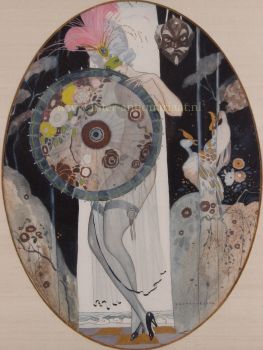
Eugène Samuel Grasset (May 25, 1845 – October 23, 1917) was a Swiss decorative artist who, in Paris, became one of the early pioneers of Art Nouveau. During the Belle Époque, he worked across an impressively broad spectrum of disciplines: from furniture and interior design to textiles, ceramics, jewelry, and, above all, graphic design. His oeuvre defined the elegant, rhythmic ornamentation and natural motifs that would become so characteristic of the new style.
Grasset was born in Lausanne and grew up in a crafts environment: his father was a cabinetmaker and sculptor, and he learned to work with chisels and gouges early on. He studied drawing with François-Louis David Bocion and left for Zurich in 1861 to study architecture. Travel also shaped him; a visit to Egypt left its mark on later designs, as did his fascination with Japanese art, whose plane divisions and stylized lines resonate throughout his work.
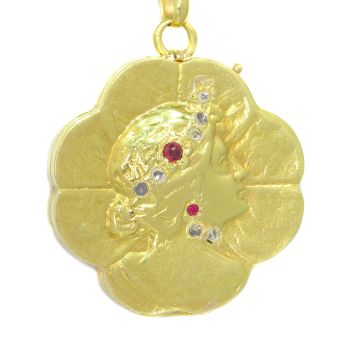
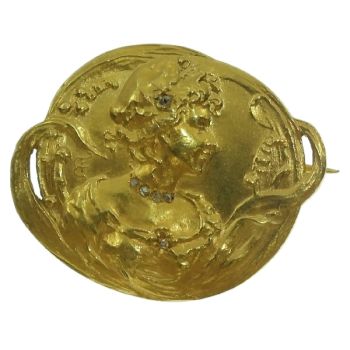
Between 1869 and 1870, Grasset worked in Lausanne as a theater set designer and sculptor. During this period, he met Eugène Viollet-le-Duc, the influential thinker who advocated a close connection between form, function, and material and who encouraged a reappraisal of the Middle Ages. This philosophy became deeply ingrained in Grasset's approach and became a backbone of his design practice. In 1871, he moved to Paris, where he developed into a versatile designer. He designed furniture, wallpaper, fabrics, and carpets, and created ceramics and jewelry. He also provided architectural wood details that were integrated into buildings. His refined decorative objects, sometimes crafted from ivory, gold, and other precious materials in unusual combinations, are considered cornerstones of the visual language of Art Nouveau.
From 1877 onward, he focused more emphatically on graphic design, with commercial commissions such as postcards and later postage stamps for France and Switzerland. Posters quickly became his greatest strength: monumental in design, clearly structured, and driven by strong lines and ornamentation. Works like his lithograph "Joan of Arc (Sarah Bernhardt)" found their way into prestigious anthologies. In 1890, he also designed the Larousse logo of the sower scattering dandelion seeds, an icon that demonstrates his ability to combine poetry and recognizability in a single image.
His international breakthrough followed the popularity of French posters in the United States. In the 1880s, Grasset received his first American commission; later, he designed, among other things, a cover for the Christmas edition of Harper's Magazine (1892) and illustrations for The Century Magazine (1894), including "The Wooly Horse" and "The Sun of Austerlitz." "The Wooly Horse" became so popular that Louis Comfort Tiffany reworked the motif in stained glass, and Grasset's American work helped pave the way for the widespread adoption of Art Nouveau in American visual culture.
Besides being a creator, Grasset was also a teacher and theoretician. He taught at various Parisian schools and studios, including the École Guérin (1890–1903), the École d’Art graphique on rue Madame (1903–1904), the Académie de la Grande Chaumière (1904–1913), and the École Estienne. From his teaching, he developed his own method for ornamental composition and worked on an alphabet based on that of Nicolas Jenson (1471). The design was patented as a typeface under the name Grasset in 1897 and later launched by the G. Peignot et Fils foundry; a cursive version also appeared (1898). In 1896, he also published a treatise on the use of plants in design, with examples prepared by his students. His students included several later designers and artists who continued his influence. Grasset's reputation rests on a rare combination of craftsmanship, architectural thought, and graphic clarity. His lines are clean yet sensual, his ornamentation rich yet disciplined, and his visual language unites historical inspiration with modern rhythm. This made him a key figure in the transition to a new, international design language: Art Nouveau.
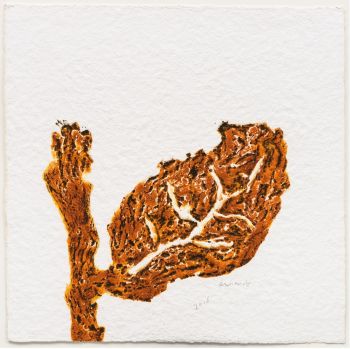
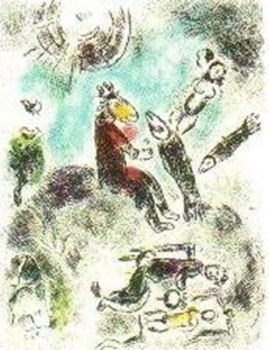
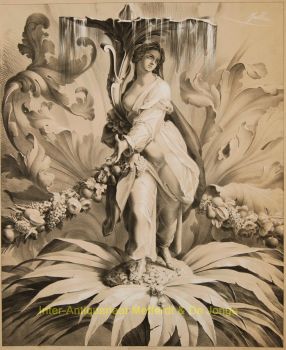
![“Tentation” [temptation], lithograph by Eugène Grasset](https://media-2.gallerease.com/images/b891f1b8-508a-4829-a559-a56b7f765ca7/1280x1280~q100/tentation-temptation-lithograph.jpg)