About the artist
Albert Hemelman (1883–1951) was a Dutch artist whose work bridges craftsmanship, modernity, and a deep fascination with industrial and urban life. Born in Neede, Gelderland, as the son of a blacksmith, Hemelman's early exposure to manual labor and materiality would subtly inform the tactile and structural qualities of his later work.
At the age of twenty, he made a decisive break from his family's expectations and moved to Amsterdam to pursue an artistic career. There, he enrolled at the National School of Applied Arts in 1905, followed by further training at the Rijksakademie. He studied under prominent artists including Pieter Dupont, Klaas van Leeuwen, George Sturm, and Nicolas van der Waay, who shaped his technical precision and compositional discipline.
Hemelman developed a versatile practice, working across oil painting, lithography, and drawing. In addition to his autonomous artworks, he produced posters and book illustrations, reflecting a strong connection to applied arts and visual communication. His oeuvre is characterized by a recurring interest in harbor scenes, industrial environments, and urban landscapes—subjects that capture the rhythm and transformation of early 20th-century life. Alongside these, he created still lives that reveal a quieter, more introspective dimension of his work.
Although based in Amsterdam throughout his life, Hemelman traveled extensively to the northern regions of Europe, including Norway, Iceland, and Spitsbergen. These journeys introduced a stark and often dramatic natural landscape into his visual vocabulary, contrasting with the structured environments of the city and industry.
He was an active member of key artistic societies such as the Academy of Saint Luke and Arti et Amicitiae in Amsterdam, placing him firmly within the Dutch artistic network of his time. As a teacher, he influenced a younger generation of artists, including Henk Henriët.
Albert Hemelman passed away in Amsterdam on January 25, 1951. His work remains a testament to a period of transition, where traditional craftsmanship met the emerging visual language of modern industry and urban expansion.
Artworks
Filter Artworks
1 artwork for sale by Albert Hemelman

Related artworks for sale





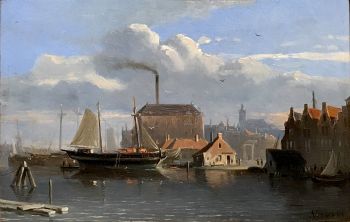

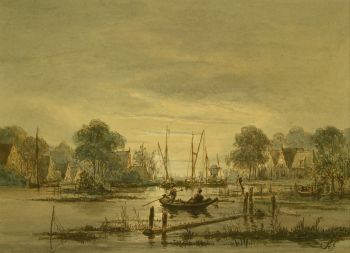
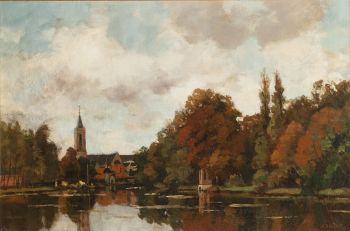
Pieter Lodewijk Francisco Kluyver
Panoramic view along a river1840 - 1880
Price on requestPrivate Collection Classic Arts

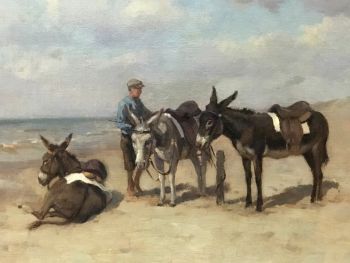
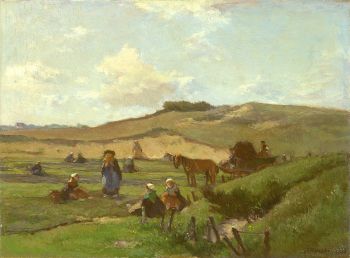
Johannes Evert Akkeringa
'Nettenboetsters' in the Dunes1861 - 1942
Price on requestStudio 2000 Art Gallery
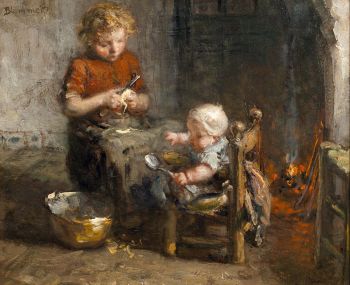


Evert Pieters
Schelpenvissers op het strand bij Katwijk1905 - 1910
Price on requestPrivate Collection Classic Arts