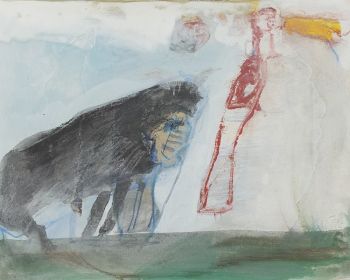
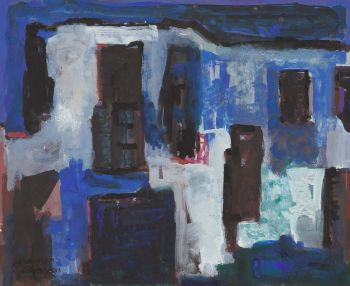
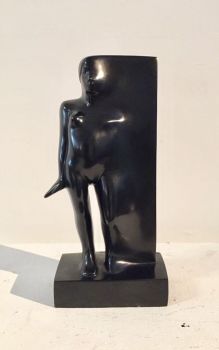
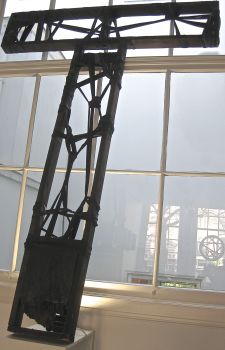
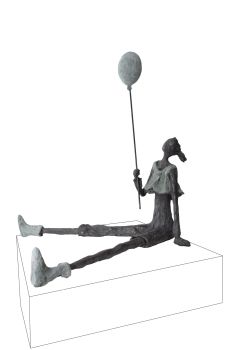
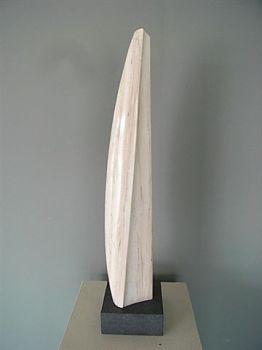
Horst Antes (1936) is a leading German painter, sculptor, and printmaker, widely regarded as one of the central figures of the New Figuration in postwar Europe. Emerging in the late 1950s and 1960s, his work marked a decisive shift away from abstraction, reintroducing the human figure in a highly personal, symbolic, and often enigmatic form.
Antes is best known for his iconic “Kopffüßler” (literally “head-footer”)—a recurring, stylized figure that became his artistic signature. These figures, characterized by oversized heads, reduced or absent torsos, and simplified limbs, often appear in profile, sometimes with vertically stacked or exaggerated eyes. Both primitive and futuristic in appearance, the Kopffüßler occupies a space between human, creature, and symbol, resisting clear narrative while evoking a strong psychological and archetypal presence.
Working across painting, sculpture, and printmaking, Antes developed a visual language that is at once direct and deeply ambiguous. His compositions are typically defined by bold contours, flat planes of color, and a restrained yet striking palette, creating a tension between clarity of form and opacity of meaning. Influenced in part by ancient, non-Western, and folk art traditions, his work reflects an ongoing search for universal imagery beyond conventional representation.
Throughout his career, Antes has played a pivotal role in shaping postwar German art, offering an alternative to both the dominance of abstraction and the later rise of conceptual practices. His Kopffüßler figures remain among the most recognizable and enduring motifs in contemporary European art, standing as emblematic explorations of identity, form, and the human condition.