About the artist
Wim Motz (Rotterdam, 1900–1977) was a unique Dutch artist with a remarkably late but powerful beginning. He only consciously chose art at the age of 37, after a varied and demanding working life that took him through a market garden, the fair, the Belgian mines, and later as a market vendor, wallpaper hanger, and house painter. This life experience forms the backbone of his oeuvre: direct, down-to-earth, and unadorned.
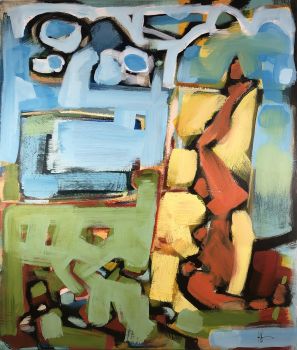
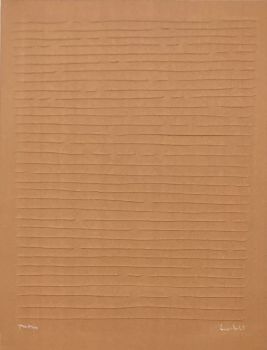
Motz took drawing lessons with Jan van Straten, who not only taught him technical skills but also introduced him to the world of visual arts. From this foundation, Motz developed rapidly and independently. His artistic quest led him from impressionistic observations to expressive painting and even to periods of pure abstraction, ultimately returning to a recognizable, human reality.
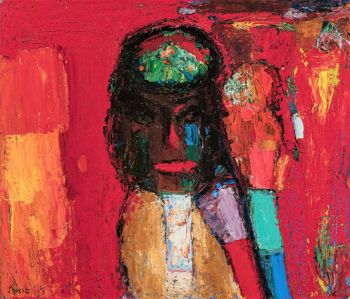
What distinguishes Wim Motz is the combination of formal freedom and substantive expressiveness. His work is often intense in color and form, with a strong emotional charge and a clear connection to everyday life. Despite his late start, he gained recognition relatively quickly: he exhibited not only in the Netherlands but also internationally, including in the United States, Canada, Switzerland, and Belgium.
Today, Wim Motz is seen as an authentic Rotterdam artist, whose work is rooted in labor, experience, and personal development. His paintings provide compelling evidence that artistic practice is not born from academic candor, but from lived experience, perseverance, and a keen eye for the world.
Artworks
Filter Artworks
1 artwork for sale by Wim Motz