Han Jansen
BiographyAbout the artist
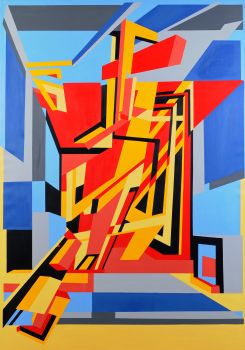
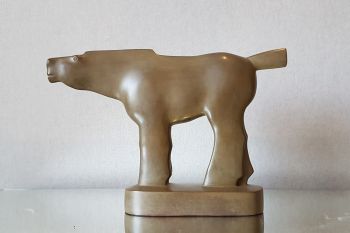
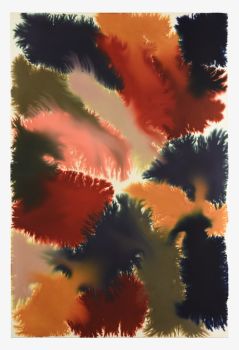
Han Jansen (born in Kloosterburen, Groningen, died in Nieuw-Loosdrecht) was a versatile Dutch visual artist, self-taught through and through. His oeuvre spans painting, graphics, sculpture and photography, but it was mainly his work as a graphic artist in the 1970s that brought him national fame.
Jansen's landscapes — often in the form of silkscreen prints — captured the characteristic Dutch countryside in clear lines and thoughtful compositions. Farms, endless skies, and cows in particular, were recurring motifs. Yet his work was far from nostalgic. With a keen eye for form and contrast, Jansen not only depicted the land, he revised it — his cows sometimes seemed more like monuments than animals, his farms stripped down to their essence.
What distinguished Jansen was his ability to evoke a maximum of atmosphere and meaning with minimal means. His self-taught background gave him the freedom to experiment outside the beaten track of art academies. This gave rise to a unique visual language, in which graphic precision and poetic simplicity came together.
Although he rarely placed himself in the foreground, his work influenced a generation of artists who also sought the essence of the Dutch landscape. Han Jansen remained true to his subjects and his idiosyncratic working methods throughout his life. His legacy lives on in collections of private enthusiasts and museums that recognize his work as a timeless tribute to the countryside.