About the artist
Joseph Beuys (1921–1986) was a German artist, teacher, performance artist and influential art theorist whose work profoundly shaped post-war contemporary art. Known for his radical ideas about the role of art in society, Beuys expanded the boundaries of artistic practice by combining sculpture, performance, drawing, installation and political action.
Born on 12 May 1921 in Krefeld, Germany, Beuys grew up in the town of Kleve near the Dutch border. After serving as a pilot during the Second World War, he studied sculpture at the Kunstakademie Düsseldorf. Later he returned to the academy as a professor, where he became known not only for his teaching but also for his outspoken belief that creativity should be accessible to everyone.
Central to Beuys’ thinking was the concept of “social sculpture”: the idea that society itself could be shaped as a work of art through human creativity, dialogue and participation. For Beuys, art was not limited to objects in galleries but was a transformative force capable of influencing politics, education and social structures.
His artworks frequently employed unconventional materials such as felt, fat, honey and copper, which he used for their symbolic and energetic qualities. Through performances, installations and lectures, Beuys explored themes of healing, ecology, spirituality and collective responsibility.
Beuys was also active in political and social movements, advocating for direct democracy, environmental awareness and educational reform. One of his best-known projects, “7000 Oaks”, initiated at Documenta in 1982, involved planting thousands of trees in the city of Kassel as a long-term ecological and social artwork.
Today Joseph Beuys is regarded as one of the most important artists of the twentieth century. His ideas about creativity, participation and the social function of art continue to influence artists, thinkers and cultural institutions around the world.
Artworks
Filter Artworks
1 artwork for sale by Joseph Beuys

Related artworks for sale
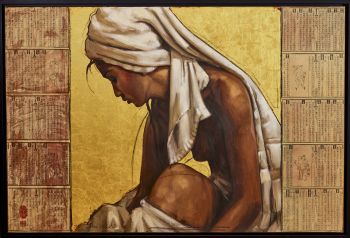


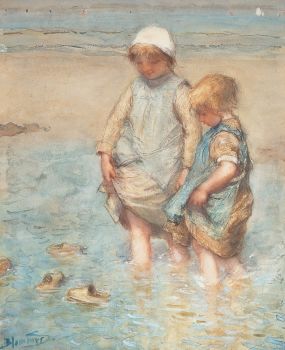
Bernardus Johannes Blommers
SPELENDE VISSERSKINDEREN1845 - 1914
Price on requestGalerie Het Noorderlicht