About the artist
Louis Albert Roessingh (Assen, 1873 – Antwerp, 1951) was a Dutch painter, draughtsman and monumental artist who moved between impressionism and symbolism, with a strong sense of decoration, colour and composition. His work is characterised by a refined aesthetic and a remarkable versatility, whereby in addition to paintings he was also active in applied art, stained glass and murals.
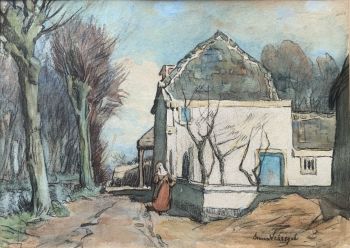
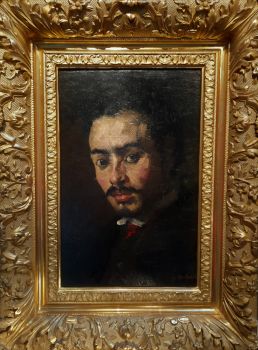
Roessingh was educated at the Rijksakademie van Beeldende Kunsten in Amsterdam and later took lessons in Antwerp, where he eventually settled. His style developed under the influence of French painting, the Jugendstil and the decorative movements of his time. He painted landscapes, flower still lifes, portraits and religiously inspired scenes, often with a soft colour tone and an almost meditative atmosphere.
During his Flemish period, Roessingh grew into a respected artist within the circles of the Catholic art movement. His monumental work – including stained glass windows and church murals – testifies to his ability to fill large spaces with rhythm, light and symbolism. At the same time, he continued to work on more personal, tranquil images with a dreamy undertone on canvas.
Roessingh had a keen sense of design and spirituality, which made him a bridge between classical painting and the emerging modern aesthetic. His work is less well-known to the general public, but experts value him as a sensitive and disciplined artist with a unique poetic signature. His legacy lives on in churches, collections and private interiors in the Netherlands and Belgium.
Artworks
Filter Artworks
1 artwork for sale by Louis Albert Roessingh