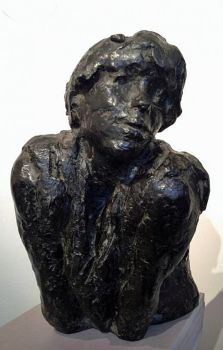
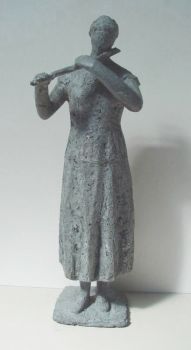
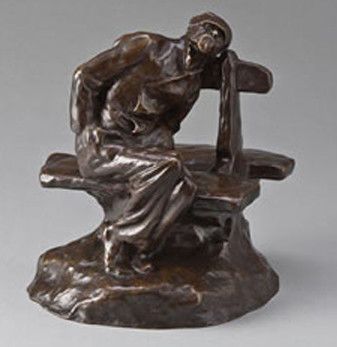
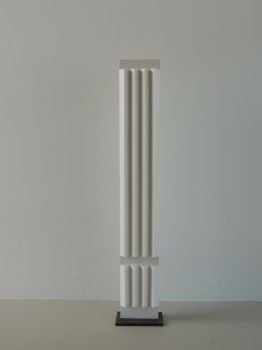
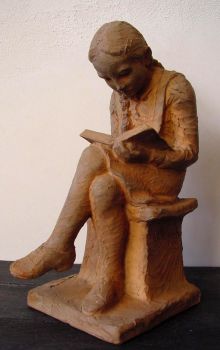
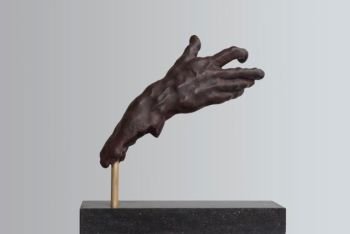
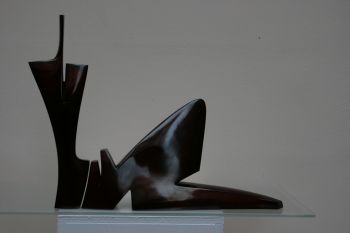
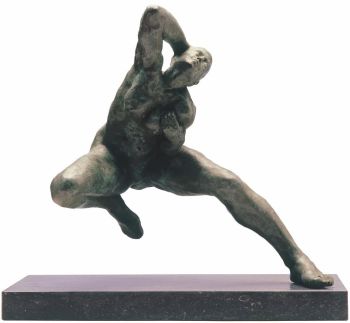
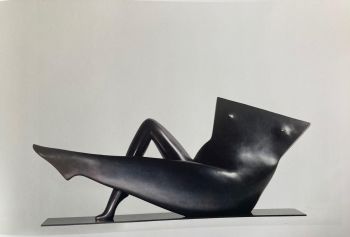
Mari(e) Silvester Andriessen was born on December 4, 1897 in Haarlem in an artistic family. His father, Louis Andriessen Sr., was a painter and restorer, and his brothers Hendrik (composer) and Nico (architect) would also become well-known artists. In this creative environment, Mari developed his love for form and expression at an early age. After his education at the Rijksakademie van Beeldende Kunsten in Amsterdam, he started as a traditional figurative sculptor, but over the years he found an increasingly sober and powerful style.
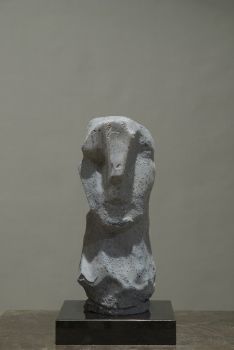
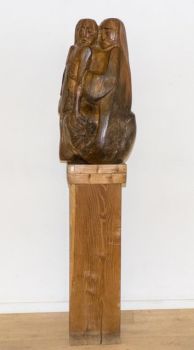
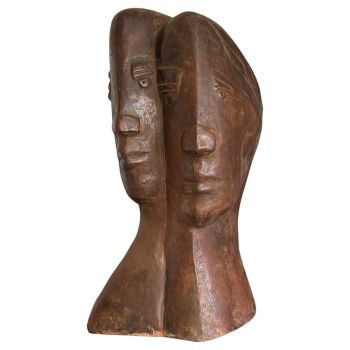
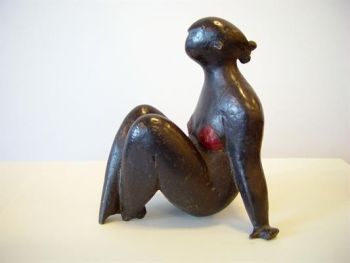
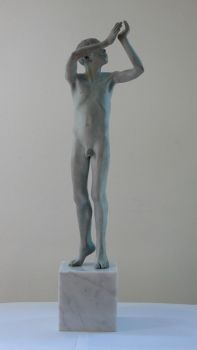
He is seen as a member of the second generation of the Group of Figurative Abstraction, simply called De Groep. These artists continued to work figuratively, but abstracted and simplified their forms to capture the essence. Andriessen's sculptures are recognizable, heavy and solid, often with a slightly stylized formal language that emphasizes inner strength and human dignity.
An important turning point in his life and work was the Second World War. He helped people in hiding and was imprisoned for that in the Oranjehotel in Scheveningen. That experience left deep scars. After the war he became one of the most important makers of resistance monuments in the Netherlands. His most famous work is The Dockworker (1952) on the Jonas Daniël Meijerplein in Amsterdam, a tribute to the February Strike of 1941. It is a massive, simple figure of a worker who radiates strength and determination — not an exalted hero, but an ordinary man standing up against injustice.
Other monuments, such as Man in front of the Firing Squad in Haarlem and The Strike in Rotterdam, also share that modest monumentality and humanity. Andriessen always sought the universal in the everyday and eliminated unnecessary details to show the core of his subject. His work is not loud or pompous but powerful in its simplicity and empathy.
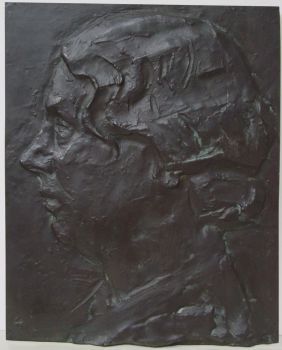
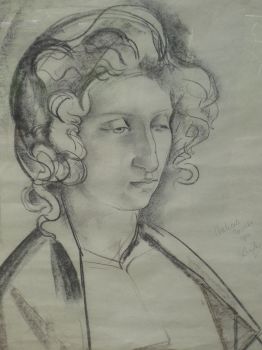
In addition to resistance monuments, he also made portraits, grave monuments and religious statues, all characterized by the same respectful sobriety. He taught young artists and was appreciated as a modest and committed man with a great sense of responsibility towards his audience.
He continued to work in his studio in Haarlem until old age. He died in his hometown on 7 December 1979. Mari Andriessen left behind an impressive and recognizable oeuvre that to this day speaks of human courage, solidarity and the power of art to remember and connect.