Jan van der Vaart was born on 17 August 1931 in The Hague. At a young age he became fascinated by form and structure. His early interest in drawing and craftsmanship led him to the Royal Academy of Art in The Hague, where he began his training in ceramics. Van der Vaart developed into one of the leading ceramicists of the Netherlands in the twentieth century, praised for his geometric and architectural approach to ceramic art.
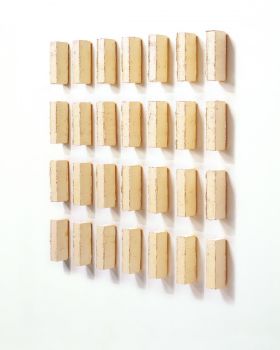
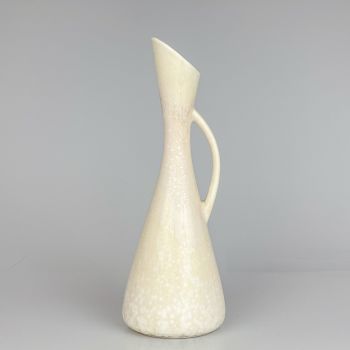
Van der Vaart was not a ceramicist who was guided by decoration or ornamentation; he sought pure, clear forms. His work is characterised by straight lines, cubist influences and an almost mathematical precision. He found inspiration in modern architecture and constructivism, and this was expressed in his vases, bowls and objects that were often modular or stackable. With his abstract approach he joined the tradition of De Stijl and the functionalist movements, but he managed to develop a signature all his own.
In 1968 he joined the Rijksakademie van Beeldende Kunsten in Amsterdam as a teacher, where he inspired a new generation of ceramists with his distinct vision of design and function. His teaching was just like his work: clear, strict and well-considered, with a great deal of attention to craftsmanship perfection.
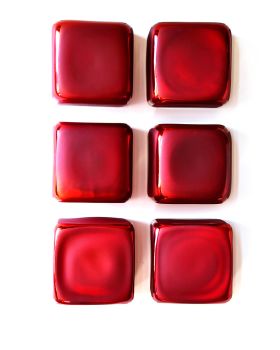
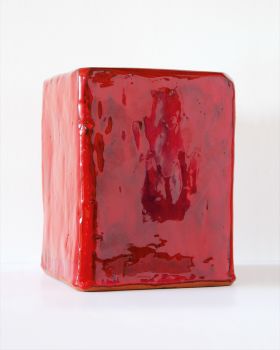
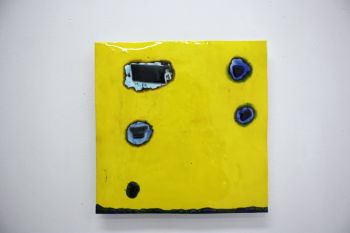
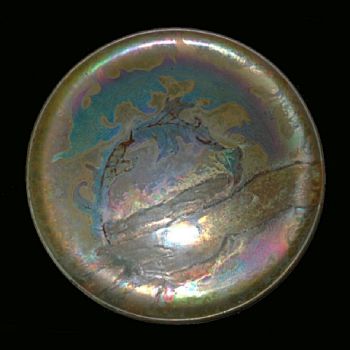
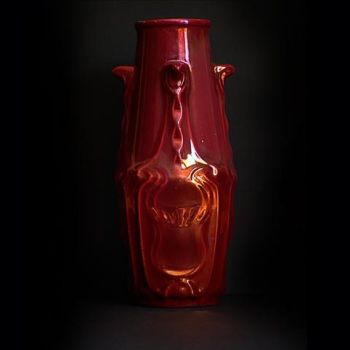
Van der Vaart experimented a lot with glazes. His glossy glazes in intense colours such as copper red, blue and turquoise have become iconic. His objects, often designed as unique pieces or in limited editions, were included in both art collections and design interiors. He saw ceramics as a fully-fledged art form and contributed to the higher appreciation of ceramics in the Netherlands, both in museum collections and on the art market.
His work is represented in numerous museums, including the Stedelijk Museum Amsterdam, the Gemeentemuseum Den Haag (now Kunstmuseum Den Haag) and international collections. In the 1970s and 1980s he also acquired fame outside the Netherlands, including in Germany and the Scandinavian countries.
Jan van der Vaart died on 14 November 2000 in Amsterdam. His legacy lives on in his timeless designs and in the many ceramists he influenced. His work remains an important reference point for contemporary ceramic art at home and abroad.