Powered byPowered by Gallerease
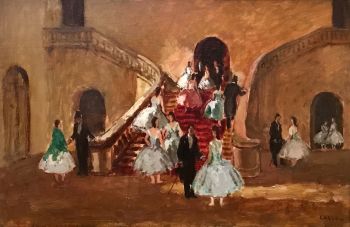
 Carmencita by Théo van Rysselberghe
 Carmencita by Théo van Rysselberghe
 Carmencita by Théo van Rysselberghe
 Carmencita by Théo van Rysselberghe
 Carmencita by Théo van Rysselberghe
 Carmencita by Théo van Rysselberghe
 Carmencita by Théo van Rysselberghe
 Carmencita by Théo van Rysselberghe
 Carmencita by Théo van Rysselberghe
 Carmencita by Théo van Rysselberghe
 Carmencita by Théo van Rysselberghe
 Carmencita by Théo van Rysselberghe
 Carmencita by Théo van Rysselberghe
 Carmencita by Théo van Rysselberghe
 Carmencita by Théo van Rysselberghe
 Carmencita by Théo van Rysselberghe

Carmencita 1883

Théo van Rysselberghe

Oil paintPanelPaint
24 ⨯ 18 cm
ConditionMint
€ 8.000

Art Dumay

  • About the artwork
    Theo van Rysselberghe was a Belgian painter associated with Neo-Impressionism, and his work “Carmencita” from 1883 is a fine example of his early artistic development. This painting is notable for several reasons.

    Historical significance: As an early work created at the beginning of Van Rysselberghe’s career, “Carmencita” offers valuable insight into his artistic growth. During this period, he was influenced by Realism and began experimenting with Impressionist techniques, before later transitioning into Neo-Impressionism.

    The fact that this panel is signed, dated, and titled enhances its provenance and authenticity.

    Format and condition: Measuring 24 x 18 cm (panel) and 32 x 26 framed, “Carmencita” is a relatively small work, likely intended as a study or an intimate composition. Its good condition adds to its value, suggesting that the colors and details have been well preserved as originally intended by the artist.

    Theo van Rysselberghe’s works are widely appreciated for their vibrant use of color and light. As his career progressed, he became one of the leading figures of Neo-Impressionism, often associated with the pointillist technique inspired by Georges Seurat. Although “Carmencita” predates his pointillist phase, it already demonstrates the careful observation and attention to detail that would later define his work. This piece is therefore of interest not only for its aesthetic qualities, but also for its historical and scholarly importance in understanding the evolution of Van Rysselberghe’s style.
  • About the artist

    Van Rysselberghe (1862 – 1926) is considered an important leader of pointillism, with which he inspired Dutch artists such as Jan Toorop.

    During one of his travels in Morocco in 1888, he literally and figuratively saw the light and started applying dots of unmixed paint with which he managed to express light and color in a sublime way. He will continue to use this technique throughout his career.

    The exhibition outlines Van Rysselberghe's development through his favorite themes: society portraits, sun-drenched landscapes from Flanders to Morocco, seascapes and the female nude. His oeuvre is an ode to the beauty of life and to painting itself.

Are you interested in buying this artwork?

Artwork details

Category
Subject
Style
Material & Technique
Colour