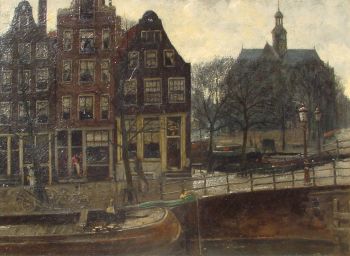
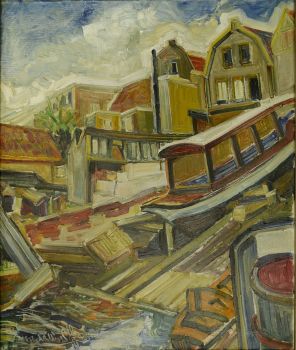
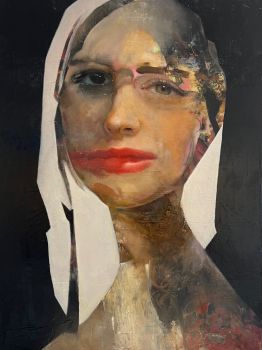
Gerard Johan Staller (Amsterdam, 2 January 1880 – ibid., 18 October 1956) was a versatile Dutch artist, known as a painter, illustrator, draftsman, graphic artist, watercolourist, etcher and plate painter. His oeuvre focused mainly on capturing Amsterdam city life, with a special focus on the Jewish neighbourhoods around the Waterlooplein and the Jordaan. This earned him the nickname "the painter of Amsterdam Jewish folk life".
Staller was educated at the Rijksnormaalschool voor Teekenonderwijzers, the Instituut voor Kunstnijverheidsonderwijs and the Rijksakademie van beeldende kunsten in Amsterdam. Here he was taught by August Allebé, among others. After his education, he initially worked in the ceramic industry as a plate painter, but later he devoted himself entirely to painting. His work consisted mainly of Amsterdam cityscapes and folk scenes, in which he captured daily life in the Jewish neighbourhoods and the Jordaan.
In 1913, Staller was awarded the Willink van Collen Prize, a prestigious award for promising artists. He was a member of the artists' associations Arti et Amicitiae and Sint Lucas in Amsterdam. He also taught Frits Schiller, an amateur painter and owner of the Schiller Hotel on Rembrandtplein.
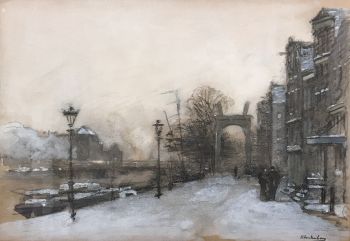
Staller was a regular visitor to Artis Zoo, where he captured the animals and visitors in his sketchbook. His paintings offer a unique historical perspective on Amsterdam city life in the first half of the 20th century, with lively market scenes, busy streets and intimate glimpses into the daily life of the Jewish community. His work is a valuable source for both art lovers and historians interested in Amsterdam's cultural heritage.
Today, Staller's works can be found in various museums and private collections. His paintings are still valued for their historical value and artistic quality, and offer a nostalgic window into a bygone era of Amsterdam city life.





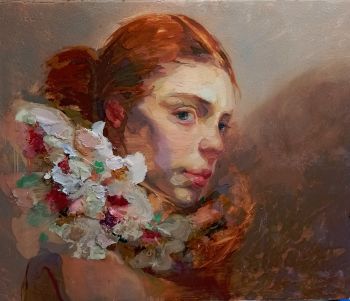




















![[copy] De blauwe hoek by Jasper van Deutekom](https://media-2.gallerease.com/images/b9d84335-95d4-46c2-8cd7-89b9bacefc2f/350x350/copy-de-blauwe-hoek.jpg)