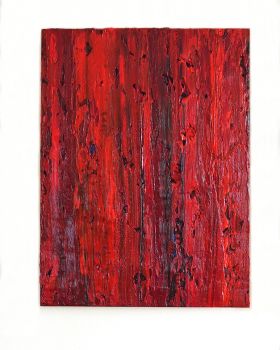
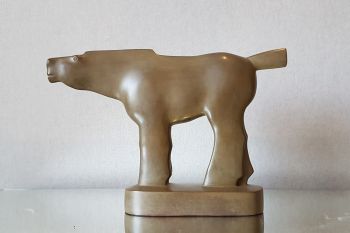
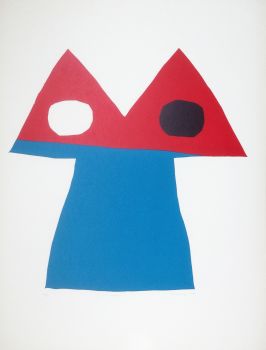
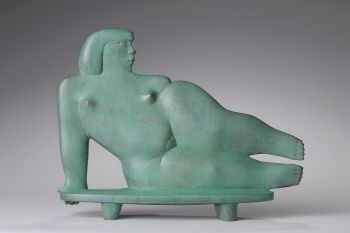
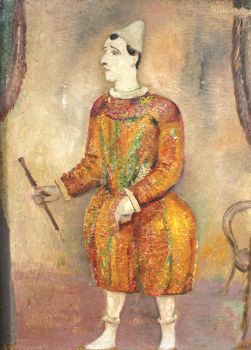
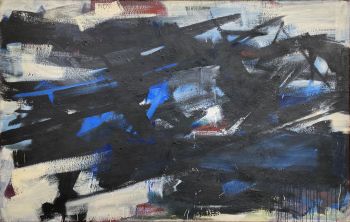
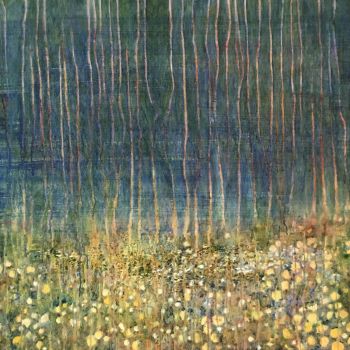
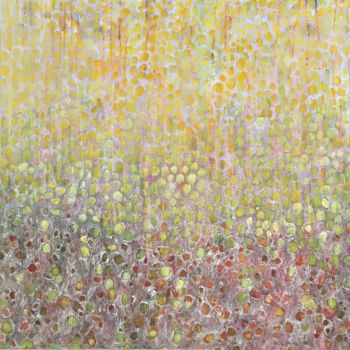
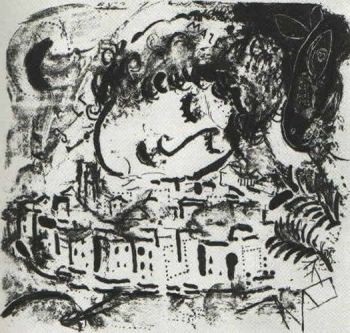
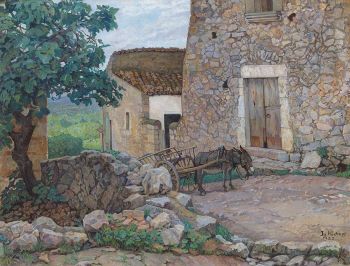
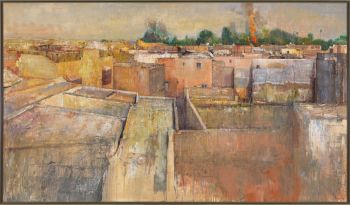
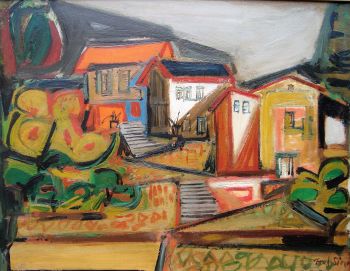
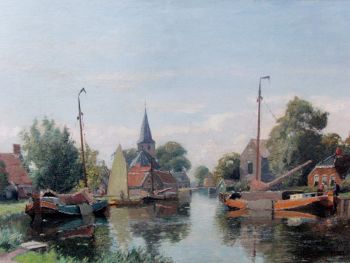
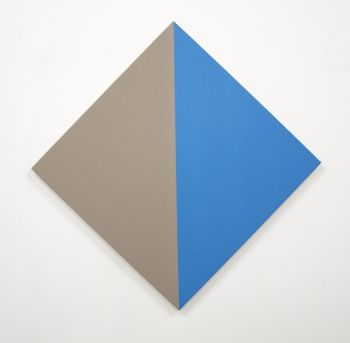
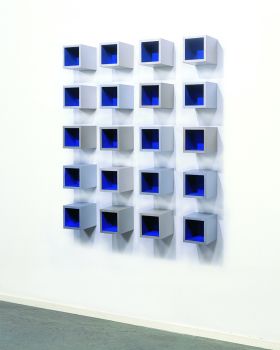
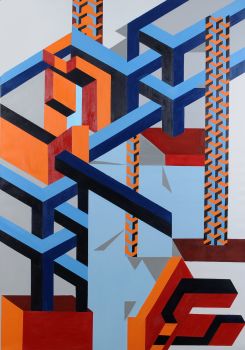
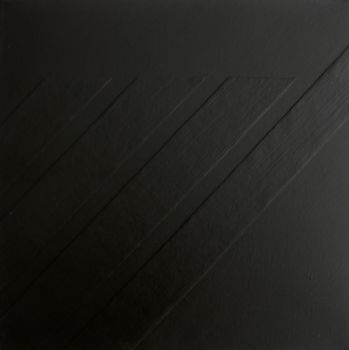
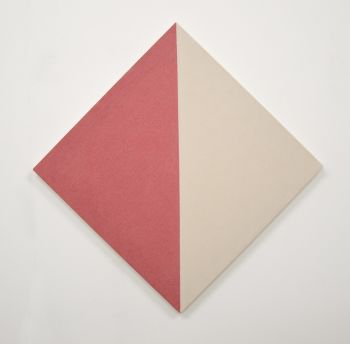
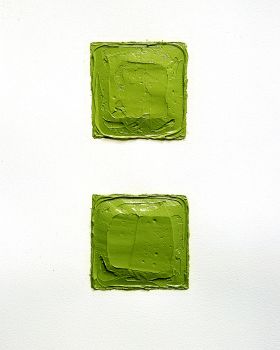
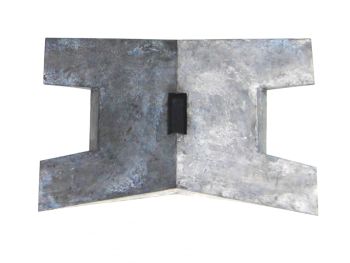
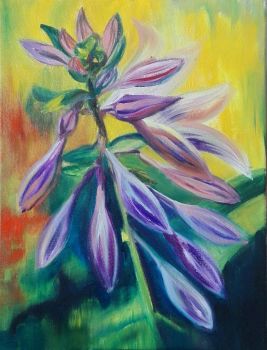
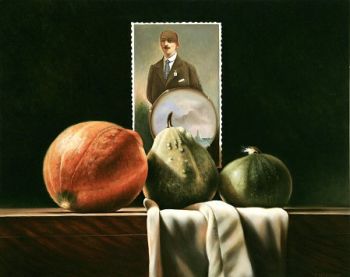
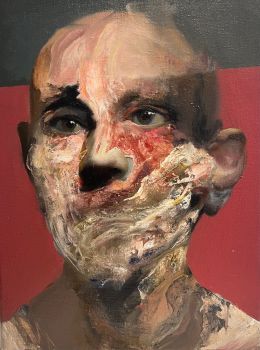
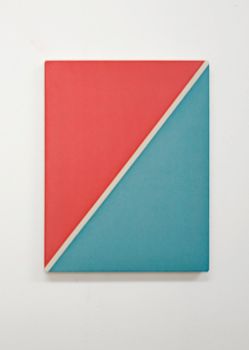
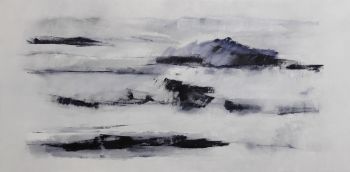
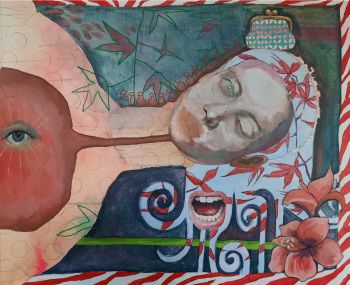
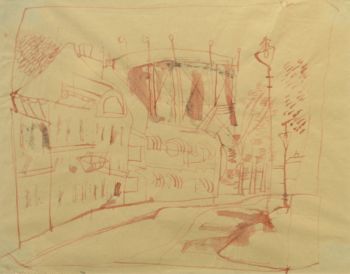
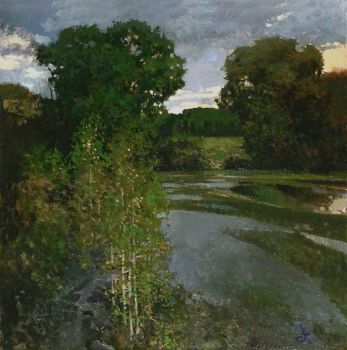
Louise Marie Loeber (Lou Loeber) was an Amsterdam born Dutch artist. In addition to being a painter, she was a glass painter, illustrater and etcher that worked mostly non-figuratively, abstract-geometrically and abstract-figuratively.
She came from a relatively wealthy and art-loving family with a summer house in Blaricum. On the recommendation of Co Bremen, a Dutch pointillist and family friend who tutored Lou Loeber, her father built her an atelier.
She came in contact with the art world at a relatively young age because of her fathers friends and acquaintances. Loeber attended the State Academy of Fine Arts in Amsterdam from 1915 until 1918. She left the academy prematurely for she considered it too conservative.
In 1919, she met Toon Verhoef, a painter that introduced her to Socialism, De Stijl, Cubism and modernism. Inspired by Albert Gleizes, Le Corbusier and Mondriaan, her work became more sober and clean.
Shortly after, Loeber began to further investigate the link between modern art and Socialism, whereafter she decided to multiply her works and keep her prices low.
She married the artist Dirk Koning in 1931 who, like Loeber, was a pacifist, progressive painter, vegan and socialist.
She preferred industrial and technological subjects that she translated to lines and shapes.
Nevertheless, Loeber considered fully abstract art elitist and always referred to reality in her earlier works. In this she showed similarities with her Blaricum neighbor Bart van der Leck.
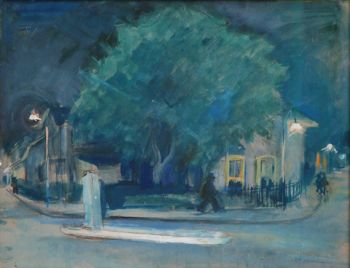
Until 1940, her work was based on recognizable representations, in accordance with her socialist views. In the simplification of her forms she finally shifts so far that her later paintings are almost entirely abstract.
Works by Lou Loeber can be found in the Singer Museum in Laren, the Rijksmuseum Twenthe and at the Cultural Heritage Agency of the Netherlands, among others.