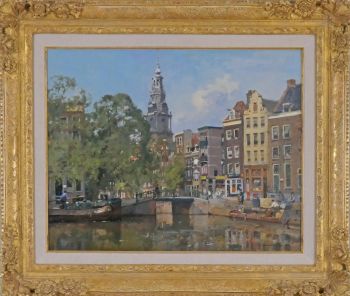
Jan Altink (1885-1971) was a prominent Dutch expressionist painter and co-founder of the Groningen artists' association De Ploeg. Born on 21 October 1885 in Groningen, he showed artistic talent at a young age. In 1900 he enrolled in the evening course at the Academie Minerva, where he won several prizes and medals during his training. In 1911 he obtained his certificate as a drawing teacher.
Altink supported himself by giving evening classes and working as a decorative painter. In May 1918 he was one of the founders of De Ploeg, a name he came up with himself, symbolizing the ploughing up of the traditional art world.
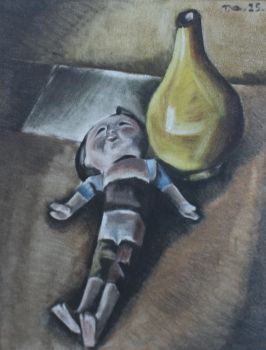
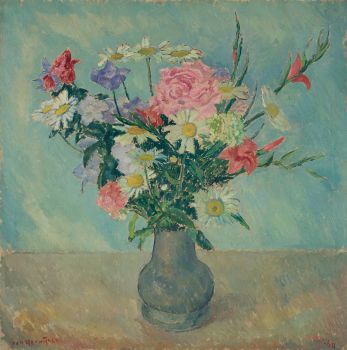
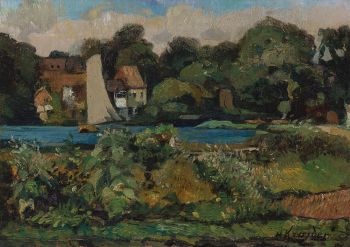
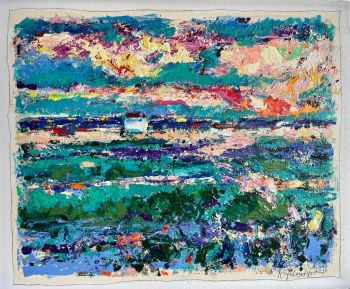
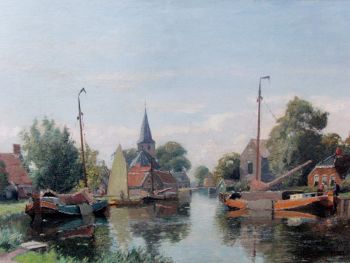
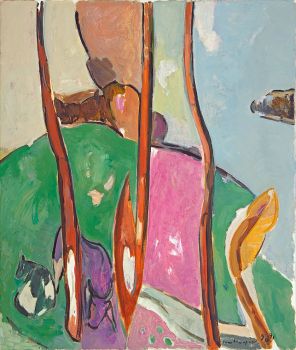
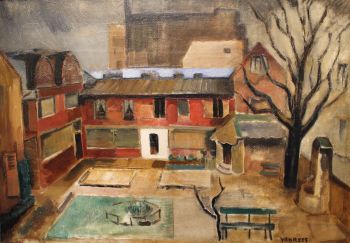
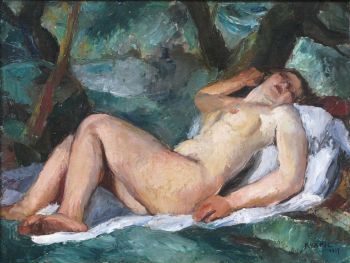
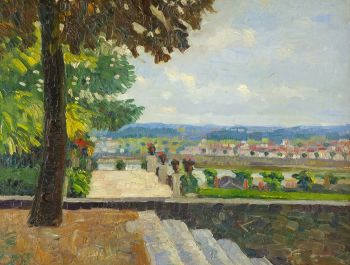
Characteristic of Altink's work is his preference for painting in the open air. He was a precise draftsman and left behind an important oeuvre as a graphic artist. In 1922 his use of colour became brighter; In 1924 he made his breakthrough with his first expressionist paintings, executed in wax paint and with strong, bright colours. The period between 1924 and 1927 is considered his most important. During those years he exhibited about eighty paintings.
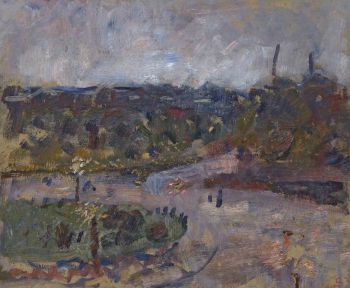
After 1927 the tone of Altink's work changed. His colour palette was often limited to just three or four colours, which he used to suggest light and space in his landscapes. After his move to the south of the city of Groningen in 1933, his attention shifted to painting and drawing the landscape of North Drenthe.
On the occasion of his 75th birthday in 1960, the Groninger Museum organised the first retrospective exhibition of his work. After the war Altink continued to work with various media and techniques. After his retirement he travelled and worked mainly in the south of France.
Jan Altink died on 6 December 1971 in Groningen, at the age of 86. His legacy remains an important contribution to Dutch art history, particularly within Expressionism and the Groningen art scene.