Mauritius  by Francois Valentijn
Scroll to zoom, click for slideshow

Maurício 1724

Francois Valentijn

Atualmente indisponível via Gallerease

  • Sobre arte
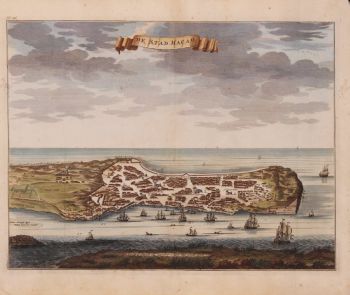
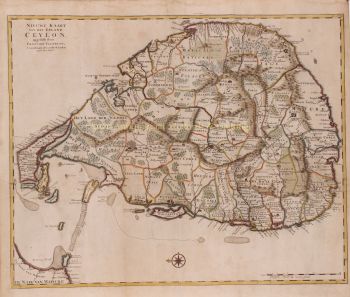
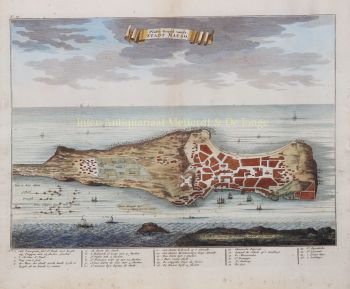
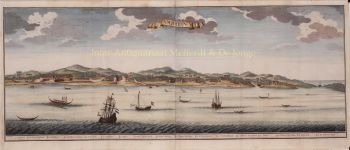
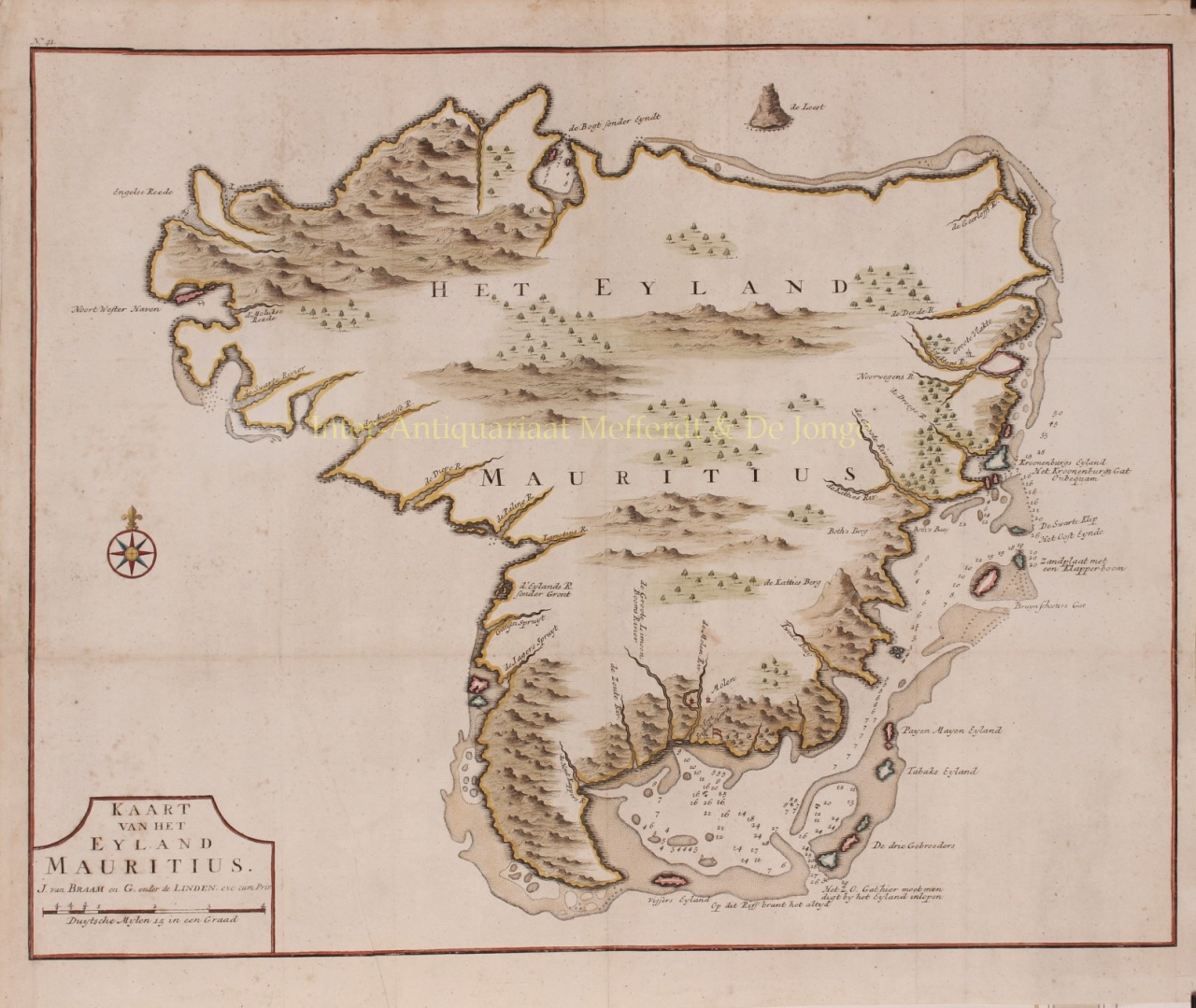
    “Kaart van het Eyland Mauritius” [map of the island Mauritius], from François Valentijn’s “Oud en Nieuw Oost-Indien”, after a drawing by Johan van Leenen, engraved by Jan van Braam and published in Dordrecht by Gerard onder de Linden in 1724-1726. Coloured by a later hand. Size.: 43 x 54 cm. Wybrant van Warwijck was the first Dutchman to arrive on Mauritius on September 18, 1598. Van Warwijck had strayed with five ships from the rest of the fleet of the so-called Tweede Schipvaart [second Dutch expedition], trying to reach Madagascar. He is said to have named the green island after Stadtholder Prince Maurice. The Dutch East India Company (VOC) initially only used the island as a refreshment station and did not permanently inhabit it. Mauritius had two good natural harbours suitable for larger ships, in the Northwest "Port de Warwick" (nowadays Port-Louis) and the Southeast. The Northwestern harbour was a sheltered bay and the Southeastern was protected by a series of islands and reefs. Valentijn reports that it was very stormy around February. Mauritius was a fertile island, rich with birds, the most important of which was the dodo for food, turtles and manatees. Pigs, deer and goats were left on the island for meat supply. In the course of the 1630s, the VOC found a permanent settlement necessary to prevent the French or the English from settling there. There were forests of ebony. Cornelis Matelief had planted lemon and orange trees. With the ships rats came to the island, against which in turn cats were released. Dutch colonization started in 1638 and ended in 1710, with a brief interruption between 1658 and 1666. Numerous governors were appointed, but continuous hardships such as cyclones, droughts, pest infestations, lack of food, and illnesses finally took their toll, and the island was definitively abandoned in 1710. Francois Valentijn (1666-1727) was a minister, naturalist and writer who is best known for his Oud en Nieuw Oost-Indien [Old and New East-India], a history of the Dutch East India Company (VOC) and their activities in the East Indies. Valentijn’s maps were among the most accurate and large scale productions detailing the East Indies thus far published. As VOC officer, Valentijn doubtless had access to VOC manuscript records which he complied into his remarkable collection of maps. In fact, Valentijn's maps are so superior to previous maps that their publication itself is rather surprising. The VOC’s policy of extreme secrecy, especially regarding cartographic matters, historically limited publication of their charts. Price: Euro 950,-
  • Sobre artista

    François Valentijn (Dordrecht, 17 de abril de 1666 – Haia, 6 de agosto de 1727) foi um ministro, historiador e cronista holandês de excecional importância para o conhecimento da Ásia no início do século XVIII. Foi enviado duas vezes para o Oriente ao serviço da Companhia Holandesa das Índias Orientais (VOC), experiência que constituiu a base da sua obra monumental, Oud en Nieuw Oost-Indiën (Velhas e Novas Índias Orientais).

    Após regressar aos Países Baixos, Valentijn dedicou-se à compilação desta extensa e inigualável obra, que nunca foi igualada em âmbito e nível de detalhe. Numa altura em que a VOC mantinha a sua informação estritamente confidencial, conseguiu reunir um vasto conhecimento recorrendo a todas as fontes orais e escritas que conseguiu obter. A sua força residia não só na sua curiosidade e tenacidade, mas também no seu talento como narrador: Valentijn escrevia de forma vívida, precisa e com uma perspectiva notavelmente ampla. Em Oud en Nieuw Oost-Indiën (Velhas e Novas Índias Orientais), glorificou explicitamente o poder e o império holandeses na Ásia. Valentijn era um nacionalista convicto e considerava ser sua missão primordial descrever o poder holandês no Oriente e, assim, demonstrar que a República não perdera a força dos seus antepassados ​​batavos. No prefácio da sua obra, enfatizou o seu desejo de tornar visível o progresso e a glória dos Países Baixos ao longo dos séculos.

    Esta postura valeu-lhe a reputação de historiador algo egocêntrico e vaidoso. Contudo, esta crítica pouco diminui o valor duradouro da sua obra. É precisamente através das suas descrições detalhadas que a interacção entre europeus e asiáticos se torna vivamente visível: não só as relações de poder colonial, mas também os encontros culturais, os mal-entendidos e as influências mútuas encontram espaço na sua narrativa.

    François Valentijn continua, por isso, a ser uma figura complexa: simultaneamente nacionalista e cronista, pregador e historiador, escritor vaidoso e fonte indispensável. A sua obra continua a ser um texto fundamental para a compreensão da presença holandesa na Ásia e da história mundial mais vasta do início da era moderna.

Artwork details