Mauritius  by Francois Valentijn
Scroll to zoom, click for slideshow

Mauritius 1724

Francois Valentijn

Currently unavailable via Gallerease

  • About the artwork
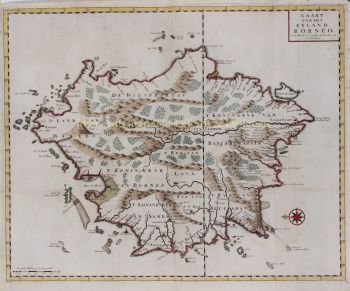
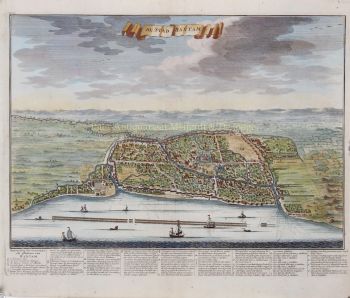
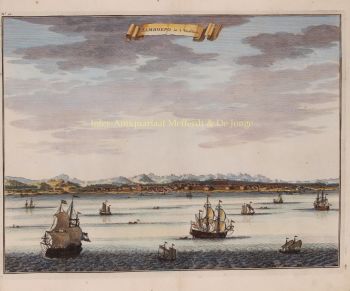
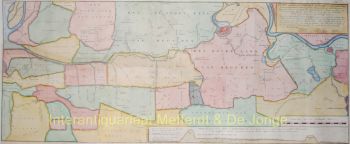
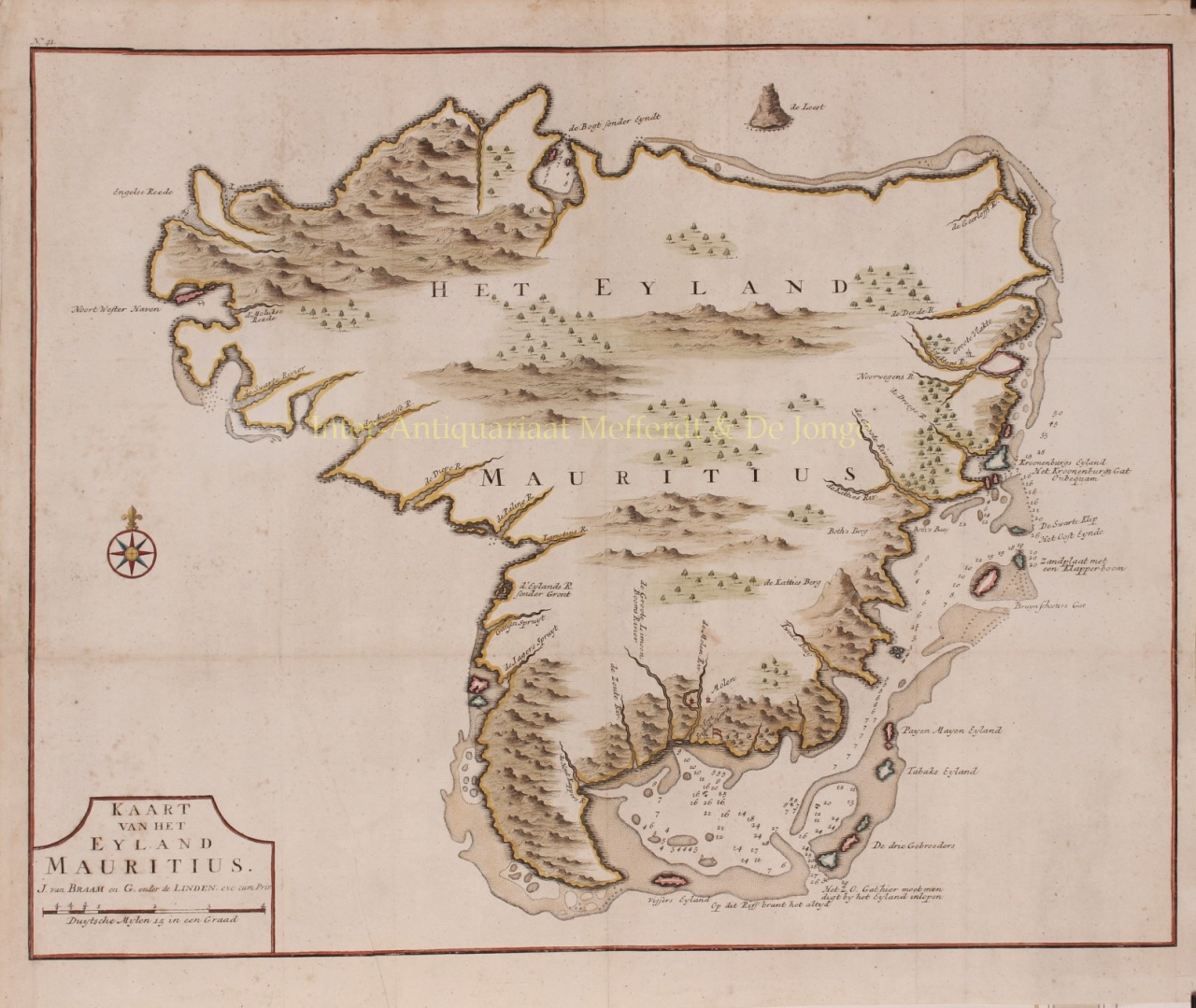
    “Kaart van het Eyland Mauritius” [map of the island Mauritius], from François Valentijn’s “Oud en Nieuw Oost-Indien”, after a drawing by Johan van Leenen, engraved by Jan van Braam and published in Dordrecht by Gerard onder de Linden in 1724-1726. Coloured by a later hand. Size.: 43 x 54 cm. Wybrant van Warwijck was the first Dutchman to arrive on Mauritius on September 18, 1598. Van Warwijck had strayed with five ships from the rest of the fleet of the so-called Tweede Schipvaart [second Dutch expedition], trying to reach Madagascar. He is said to have named the green island after Stadtholder Prince Maurice. The Dutch East India Company (VOC) initially only used the island as a refreshment station and did not permanently inhabit it. Mauritius had two good natural harbours suitable for larger ships, in the Northwest "Port de Warwick" (nowadays Port-Louis) and the Southeast. The Northwestern harbour was a sheltered bay and the Southeastern was protected by a series of islands and reefs. Valentijn reports that it was very stormy around February. Mauritius was a fertile island, rich with birds, the most important of which was the dodo for food, turtles and manatees. Pigs, deer and goats were left on the island for meat supply. In the course of the 1630s, the VOC found a permanent settlement necessary to prevent the French or the English from settling there. There were forests of ebony. Cornelis Matelief had planted lemon and orange trees. With the ships rats came to the island, against which in turn cats were released. Dutch colonization started in 1638 and ended in 1710, with a brief interruption between 1658 and 1666. Numerous governors were appointed, but continuous hardships such as cyclones, droughts, pest infestations, lack of food, and illnesses finally took their toll, and the island was definitively abandoned in 1710. Francois Valentijn (1666-1727) was a minister, naturalist and writer who is best known for his Oud en Nieuw Oost-Indien [Old and New East-India], a history of the Dutch East India Company (VOC) and their activities in the East Indies. Valentijn’s maps were among the most accurate and large scale productions detailing the East Indies thus far published. As VOC officer, Valentijn doubtless had access to VOC manuscript records which he complied into his remarkable collection of maps. In fact, Valentijn's maps are so superior to previous maps that their publication itself is rather surprising. The VOC’s policy of extreme secrecy, especially regarding cartographic matters, historically limited publication of their charts. Price: Euro 950,-
  • About the artist

    François Valentijn (Dordrecht, April 17, 1666 – The Hague, August 6, 1727) was a Dutch minister, historian, and chronicler of exceptional significance for the knowledge of Asia in the early eighteenth century. He was twice sent to "the East" in the service of the Dutch East India Company (VOC), an experience that formed the basis for his monumental life's work, Oud en Nieuw Oost-Indiën (Old and New East Indies).

    After returning to the Netherlands, Valentijn devoted himself to compiling this extensive and unparalleled work, which has never been equaled in both its scope and level of detail. At a time when the VOC kept its information strictly confidential, he managed to amass a vast body of knowledge by utilizing all the oral and written sources he could obtain. His strength lay not only in his curiosity and tenacity, but also in his talent as a storyteller: Valentijn wrote vividly, precisely, and with a remarkably broad perspective.

    In Oud en Nieuw Oost-Indiën (Old and New East Indies), he explicitly glorified Dutch power and empire in Asia. Valentijn was a staunch nationalist and saw it as his overarching mission to describe Dutch power in the East and thus demonstrate that the Republic had not lost the fortitude of its Batavian ancestors. In the preface to his work, he emphasized his desire to make visible the progress and glory of the Netherlands throughout the centuries.

    This attitude earned him the reputation of a somewhat self-absorbed and vain historian. Yet, this criticism does little to detract from the enduring value of his work. It is precisely through his detailed descriptions that the interaction between Europeans and Asians becomes vividly visible: not only colonial power relations, but also cultural encounters, misunderstandings, and mutual influences are given a place in his narrative.

    François Valentijn thus remains a complex figure: simultaneously nationalist and chronicler, preacher and historian, vain writer and indispensable source. His work remains a key text for understanding the Dutch presence in Asia and the broader world history of the early modern period.

Artwork details